
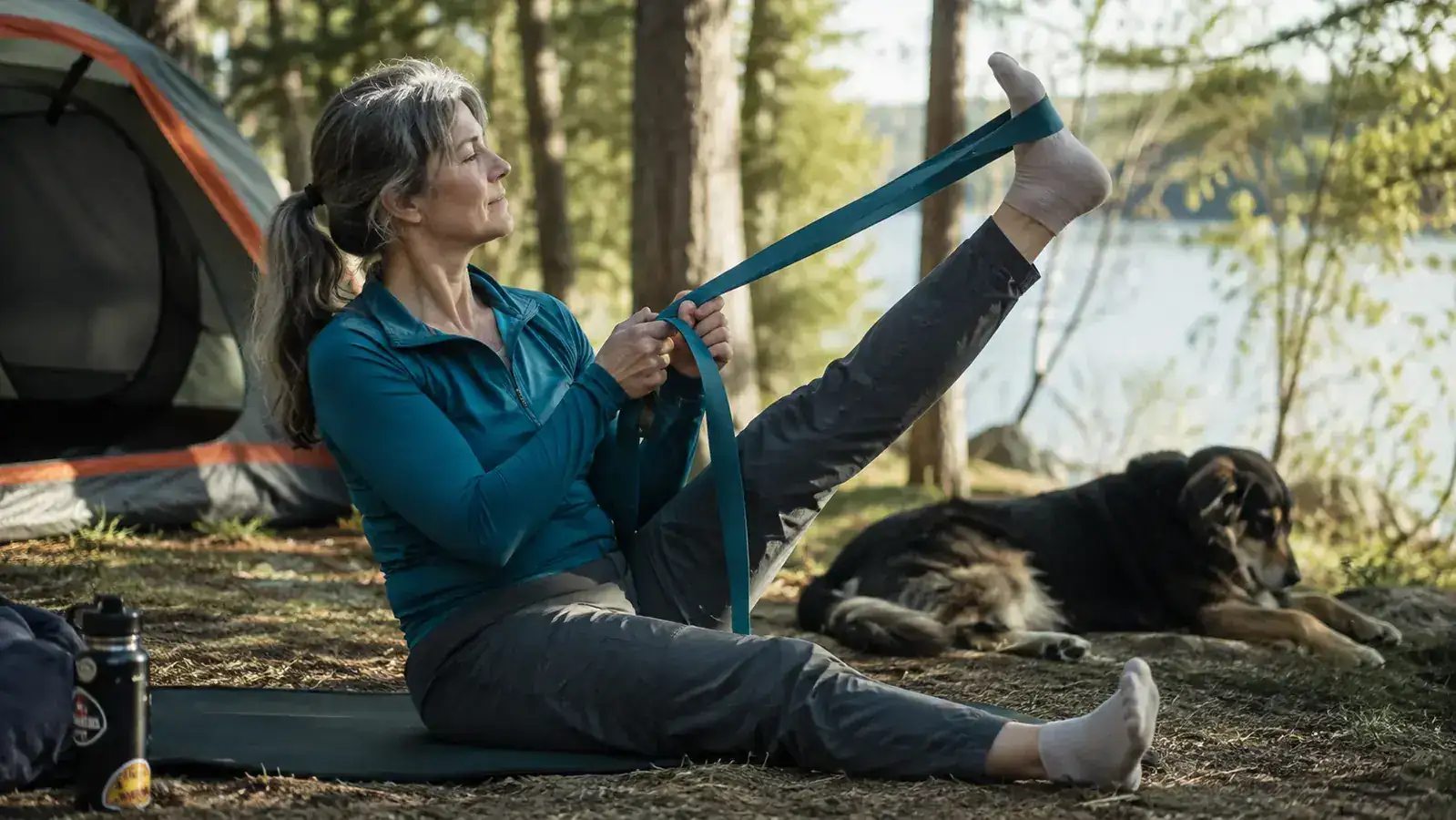
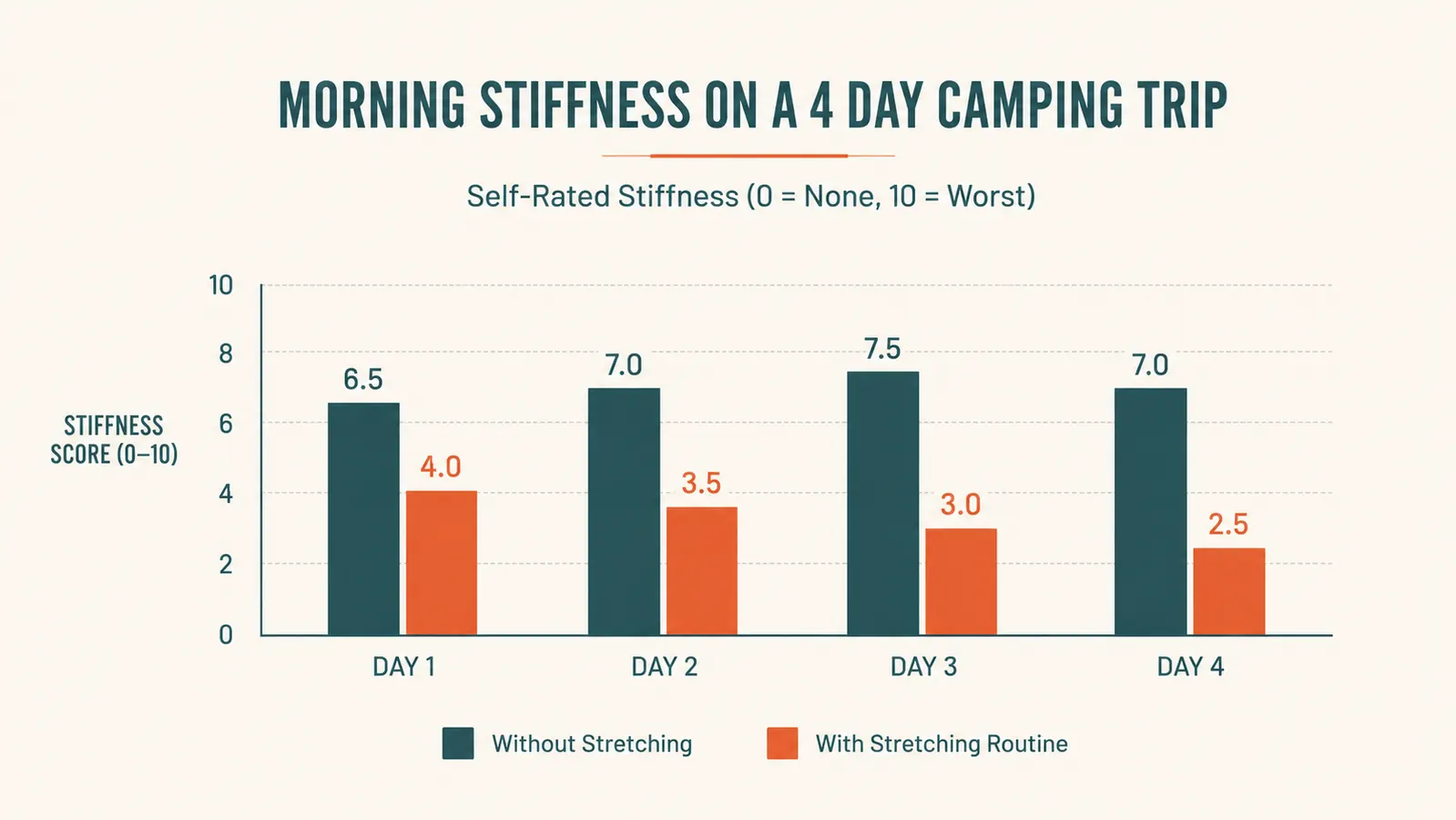
Every camping trip has a moment where I find out how my hips actually feel, and it's never at the trailhead. It's the first ten minutes after I unzip the tent, when my lower back and hamstrings remember I'm in my fifties and just slept on the ground for the first time in months. Two summers ago that stiffness cost me most of a day on a four day trip near the Sawtooth range. I sat at the picnic table icing my hip while my dog Scout paced the loop trail without me, and I decided that particular trip wasn't repeating itself.
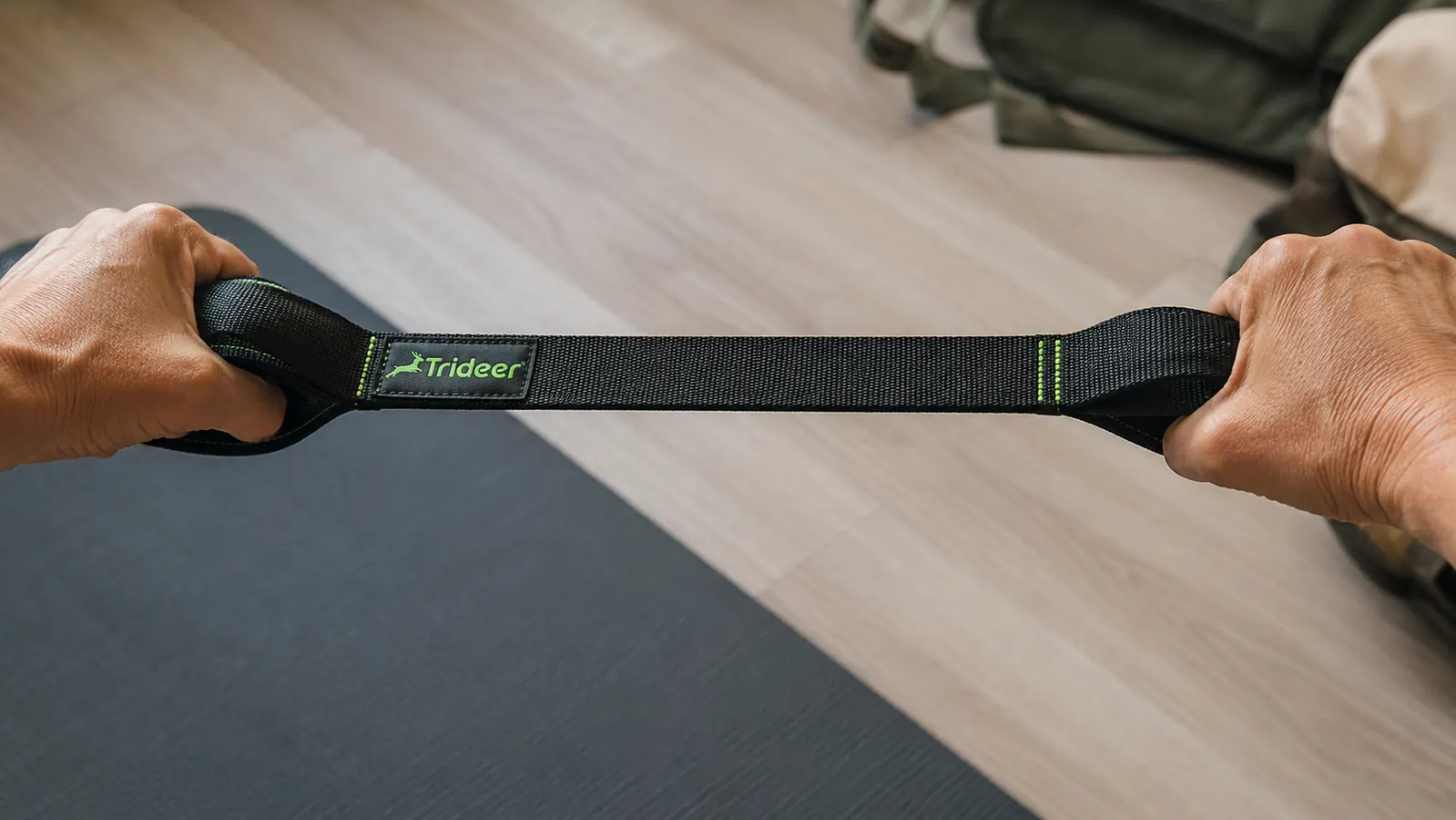
The fix wasn't a new sleeping pad or a different tent site, both of which I'd already tried. It was a plain strip of nylon webbing called a stretch strap, specifically the Trideer version with sewn loops down the length of it, which I now keep clipped to the outside pocket of my pack next to my headlamp. I've used a lot of recovery gear that sounded good in a product listing and did nothing by day forty, once the novelty wore off. This one earned its spot and kept it. Here are ten reasons the Trideer stretch strap has become as automatic to pack as water.
The Simplest Fix for Stiff Camping Mornings
If your hips and hamstrings feel locked up the first morning of every trip, a Trideer stretch strap takes two minutes to loosen what a whole night on the ground tightened.
Amazon Check Today's Price on Amazon →It Isolates One Hip at a Time, Which a Toe Touch Never Does
Standing and reaching for my toes stretches whichever side is already looser and does almost nothing for the tight one, which for me is always my right hip. The Trideer strap loops around a single foot, so I can pull one hamstring at a time while the other leg stays flat on the ground. That single change is what finally got into my actual tight hip instead of skating past it every morning.
The Loops Mean I Don't Need to Be Flexible to Use It
This sounds backward, but a stretch strap is for the person who can't reach their foot, not the person who already can. There are eight or nine loops spaced along the strap, so I grab whichever one meets my hand without straining my shoulder or curling my spine to get there. On a stiff morning I use the loop closest to me. Three days into a trip, I've usually worked down to a farther one.
It Packs Flat and Weighs Almost Nothing
I weigh everything that goes in my pack, and this strap barely registers on the scale. It rolls up smaller than a pair of socks and lives in the same stuff sack as my first aid kit. Compared to a foam roller, which I tried carrying exactly once and never again, it's not even a real decision. There's no version of packing light where leaving this out saves meaningful weight or space.
It Works Before I've Had Coffee
Nothing about this requires balance, coordination, or being fully awake. I lie flat on my sleeping bag, loop the strap around one foot, and pull. That's the whole routine. On the mornings I'm the most stiff and least motivated, that low bar is the reason it actually gets done instead of getting skipped in favor of just standing up and hoping for the best.
It Doubles as a Leg Lifter for My Bad Hip
I have mild hip impingement on my right side, and the strap works as a leg lifter, holding my leg up and slightly out at an angle a normal stretch can't hold on its own. I use it that way two or three times a week at home, not just on trips. It's replaced a separate leg lifter strap I used to keep in a drawer and almost never reached for.
The Non-Elastic Webbing Doesn't Lie to Me
I tried a stretchy resistance band for this before I owned the Trideer strap, and it gave a false sense of range because the band itself was stretching, not my hamstring. The Trideer strap is flat, non-elastic nylon. When I pull and feel resistance, that's my muscle, not the material giving way underneath me. It's a small thing that makes a real difference in knowing whether I'm actually improving or just fooling myself on a given morning.
It's Given Scout Her Morning Walk Back
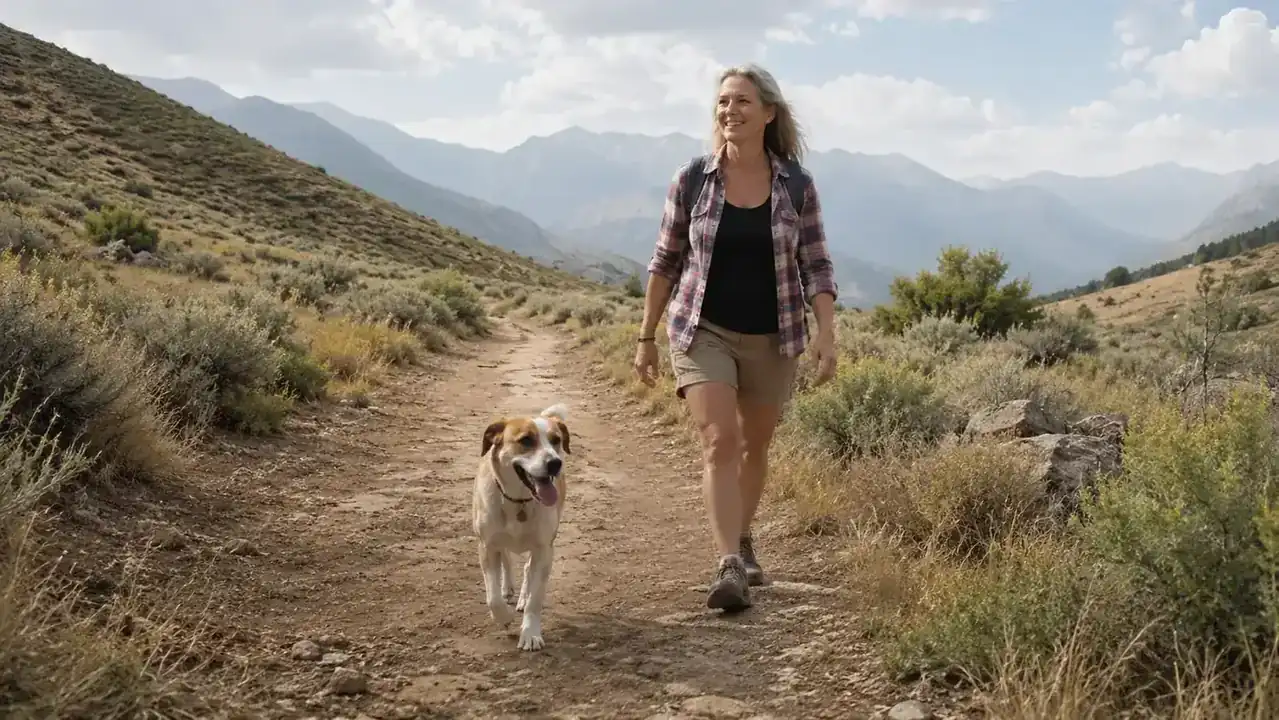
My dog doesn't care about my hip flexors, she cares about whether I'm walking to the trailhead loop at a normal pace or limping to the picnic table. Since I started using the strap every morning of a trip, that first walk isn't a negotiation anymore. She gets her full loop, I get to warm up doing something instead of standing around waiting to feel less stiff.
It Travels Better Than a Foam Roller
A foam roller does more for a sore back, I won't pretend otherwise, but it doesn't fit in a duffel bag, a carry-on, or the side pocket of a daypack without eating half the space. The strap does, easily. It's the one recovery tool I've actually kept using on a road trip, a flight, and a tent trip without swapping my routine or leaving it behind because it was too bulky to justify packing.
It's Affordable Enough I Keep One in Every Bag
It costs little enough that I didn't just buy one Trideer strap, I bought a second one that lives permanently in my car and a third that stays in my gym bag. That's not a sales pitch, it's just math. A tool that costs less than a trailhead parking fee and gets used almost daily is one of the easier purchases I've made for how I feel in the mornings, camping or not.
It's Become Part of My Actual Routine, Not a Resolution
The honest test of any recovery tool isn't whether it works the first week, it's whether it's still out of the bag on day forty. This one is. It sits by my sleeping bag on every trip and by my nightstand at home, and I reach for it without thinking about it now, the same way I reach for coffee. That's the difference between gear I own and gear I actually use.
What I'd Skip
I'd skip the padded ankle cuff versions that cost three times as much for a marginal comfort upgrade. I tried a friend's fancier strap with a foam cuff, and the padding just adds bulk to the pack without adding an inch of extra stretch. I'd also skip buying one with too few loops, since the whole point is being able to reach one that matches how stiff you are that particular morning, not the one you were three weeks ago. Plain webbing, a lot of loops, low price. That's the whole spec sheet worth caring about here.
The difference between gear I own and gear I actually use on day forty is usually just whether it's still easy to reach for.
Stop Sitting Out the First Morning
A Trideer stretch strap costs less than a trailhead parking pass and takes two minutes before coffee. That's a small trade for not spending your first camping morning at the picnic table watching everyone else leave without you.
Amazon Check Today's Price on Amazon →