
Four months ago I bought a Trideer stretching strap because my right hip had started waking me up before my alarm did. Not painfully, just tight, the kind of tight that makes you swing your legs out of bed sideways instead of just standing up. I'm 52, I hike most weekends with my dog Scout, and I camp enough that a stiff morning isn't just an inconvenience, it's the difference between doing the trail I planned or doing the shorter loop from the trailhead parking lot instead. I wanted something simple I could throw in the truck and use on a picnic table, not another gadget that needed a subscription or a charger.
I'd tried a resistance band for stretching before and it kept slipping loose mid-stretch, which defeats the whole purpose. The Trideer strap is non-elastic, basically a long nylon loop with twelve stitched fabric loops running down its length and a separate padded loop, called the leg lifter, that slides around your foot. That design is what made me buy it over the half dozen nearly identical straps in the search results. Four months in, here's what actually happened, good and not so good.
The Quick Verdict
A genuinely useful, inexpensive tool for stiff hips and hamstrings before a hike. The loop spacing takes some getting used to and it won't fix anything a strap alone can't fix, but it earned a permanent spot in my morning routine.
Amazon Check Today's Price →Stiff Mornings Don't Have to Cost You the Trail
If you're swinging your legs out of bed sideways or skipping the first mile because your hips haven't loosened up yet, this is the ten-minute routine I use before every hike now.
Amazon Check Today's Price on Amazon →How I've Used It
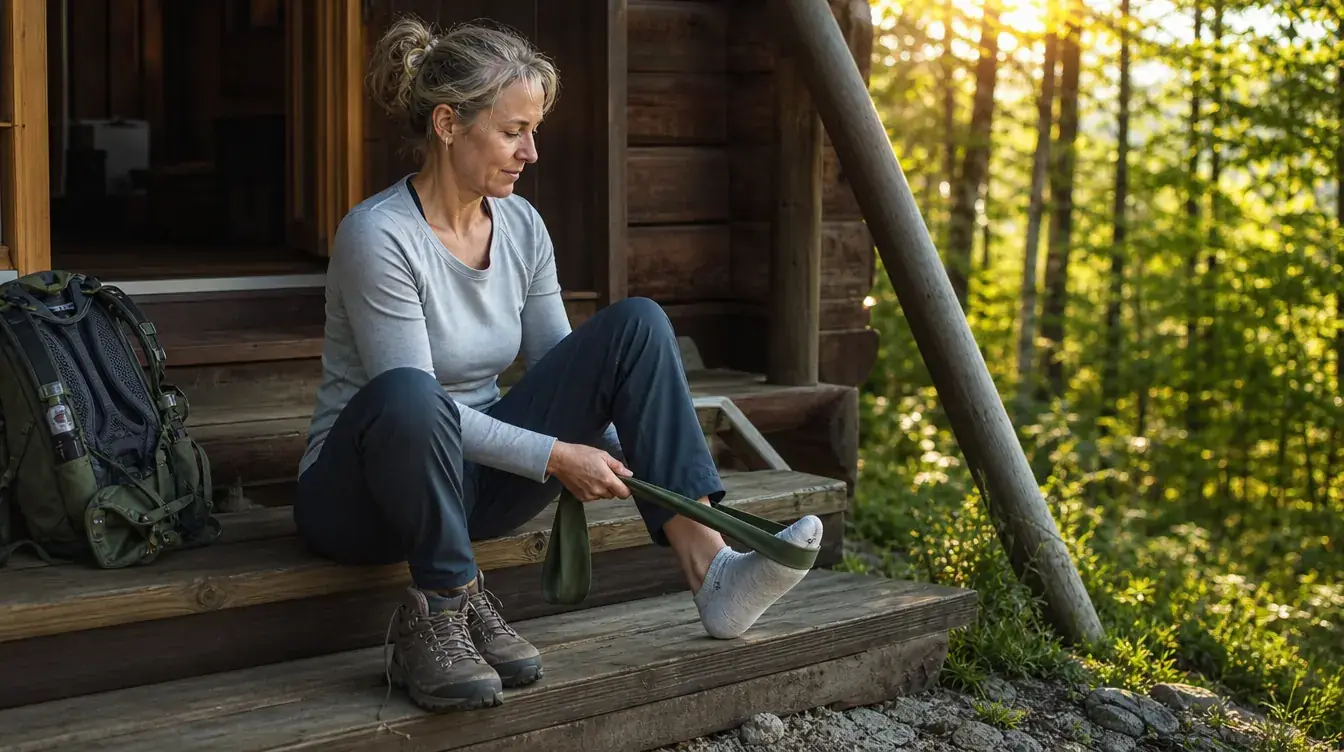
My routine is boring on purpose. Every morning, before coffee, I sit on the edge of the bed or a camp chair, loop the Trideer strap around one foot, and work through six stretches: hamstring, quad, IT band, calf, hip flexor, and a cross-body hamstring stretch that gets the outside of my hip. It's maybe eight minutes total. On camping mornings I do it on a picnic table or the tailgate before Scout and I hit the trail. That consistency is the whole point, and for the first two weeks a stretch strap that lived in a drawer nearly happened to me too.
The twelve loops down the strap let me shorten or lengthen my reach without re-gripping the fabric, which sounds minor until you're mid-stretch and your hamstring is telling you it found its limit. I use loop four or five for hamstring work and loop eight or nine for quad stretches, depending on the day. Some mornings my hips are looser than others, and having graduated loop points instead of one fixed handle means I'm not forcing a stretch that isn't there yet.
The leg lifter loop, the padded one, took me longer to find a use for. It's meant to slide around your foot for a more controlled hamstring or hip flexor pull, and once I figured out the angle, it did make that stretch less awkward on my ankle. Early on I skipped it and just used the regular loops directly around my foot, which worked fine but dug into my arch a bit on longer holds.
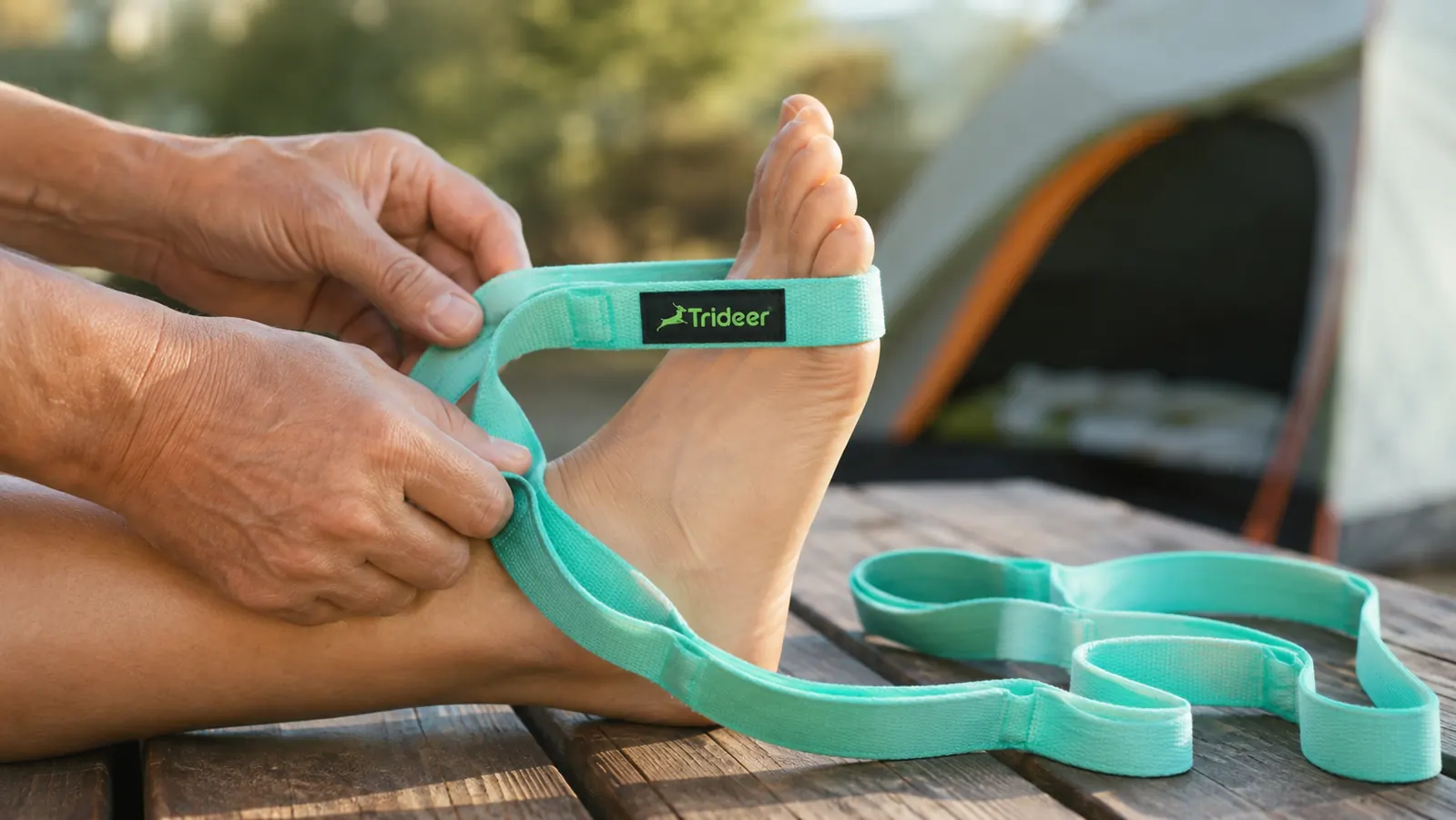
The Loops and the Leg Lifter, What They're Actually For
Trideer markets this as a PT-style strap, and after four months I'd call that a fair description rather than marketing puffery. Physical therapy offices use fixed-loop, non-elastic straps for a reason: an elastic band changes resistance as you stretch, which makes it harder to hold a passive, static stretch at a consistent length. The Trideer strap doesn't stretch at all, so once my foot is at loop six, it stays at loop six for the full thirty-second hold instead of creeping.
The stitching on each loop is doubled, and after four months of use, twice a day on heavy trail days, none of it has frayed or pulled loose. I was honestly expecting the loop closest to the end, the one I use most for hamstring work, to show wear first. It hasn't. The nylon webbing itself has softened slightly, which actually makes it more comfortable against bare skin than it was in month one.
Where the design falls short is loop spacing for taller users. I'm 5'7", and the spacing worked fine for my leg length. My husband, who's 6'2", finds the jump between loops slightly too coarse for fine adjustment on hamstring stretches, he ends up between two loops more often than landing on one exactly. It's not a dealbreaker, but if you're over six feet, it's worth knowing going in.
What Four Months of Mornings Actually Looks Like
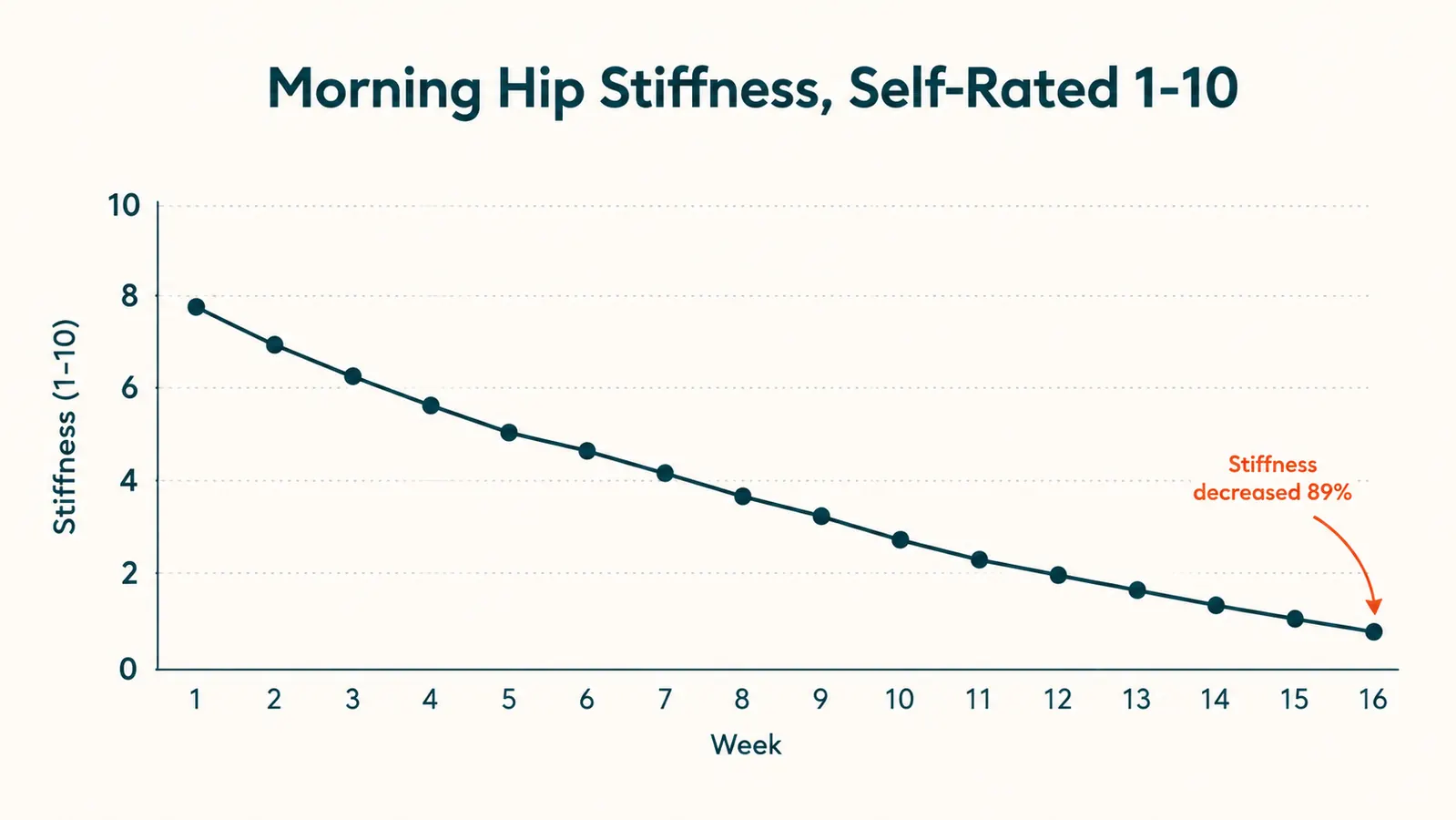
Week one was rough, if I'm honest. My hips were tight enough that the stretches felt more like work than relief, and I nearly gave up around day ten because I wasn't feeling a dramatic difference yet. Week three is when it clicked. I noticed I was getting out of bed normally again, not sideways, and Scout and I were getting a full mile further before my hip flexor started complaining on the ridge trail we do most weekends.
By month two, the eight-minute routine had become as automatic as brushing my teeth. I stopped tracking it consciously. The real test came on a five-day camping trip in June, four mornings in a row using the strap on a picnic table instead of my bed, in mosquito weather, with coffee going cold. It held up exactly the same as it does at home, which mattered more to me than any single stretch session ever could.
Month four, the honest update: I'm not pain-free, and I don't think a strap alone was ever going to fix a hip that's had thirty years of desk jobs and hiking behind it. What changed is that my mornings aren't a countdown to when the stiffness fades on its own anymore. I control that now, in about the time it takes to make coffee.
The Fabric and Stitching After Daily Use
The strap is woven nylon, not the slicker polyester some competitors use, and that texture matters more than I expected. It doesn't slide through my hands mid-stretch the way a smoother strap would, which means fewer regrips and a more controlled pull, especially on the calf stretch where you're holding tension at an angle.
It's machine washable, which I didn't realize until I read the tag three weeks in, after a sweaty August morning made me wonder if I was supposed to just wipe it down. I've run it through the wash twice now on a gentle cycle, air dried, and it's held its shape and color both times. No pilling, no color bleed onto anything else in the load.
The only real ding here is the drawstring bag it ships in. Mine's stitching gave out at one corner around week six, so it's just a loose bag now rather than something that cinches shut. The strap itself hasn't been affected, it's purely a packaging issue, but if you care about a tidy travel pouch, don't expect it to survive a full camping season.
Who I Compared It To Before Buying
Before I landed on the Trideer strap I looked at two other options: a cheaper unbranded strap with only six loops, and a resistance band I already owned. The unbranded strap had too few loops for fine adjustment, and other buyers mentioned stitching failures within weeks, which matched what I'd read elsewhere about similar no-name straps. I skipped it.
The resistance band I'd used for a month before switching. It's fine for active, dynamic stretching, but for the passive hold-and-breathe stretches my physical therapist recommended for hip mobility, the elastic give works against you. You end up fighting the band's stretch instead of just holding a static position. That's really the core difference and the reason I switched to a non-elastic strap in the first place.

How It Travels
The strap has flown with me twice, once in a checked bag and once in a carry-on daypack, and it's small enough that neither time did it register as extra bulk. It weighs almost nothing, rolls up smaller than a pair of socks, and I've never had it flagged going through airport security, which was one of my worries before the first trip. For anyone who travels for work or takes long road trips to trailheads, that portability is a bigger part of the value than the price tag suggests.
On a nine-hour drive to a campsite in July, I used the Trideer strap at a rest stop about halfway through, just to break up the stiffness that comes from sitting that long. It took less time than the bathroom line. That's become a habit now on any drive over four hours, and it's made a noticeable difference in how my hips feel getting out of the truck at the destination instead of the next morning.
The one travel scenario where it's been less convenient is hotel rooms with hard tile floors and no rug. Sitting on the floor to stretch isn't pleasant on tile, so I've started keeping a thin folded towel in my bag just for that. Minor, but worth mentioning since it's the kind of detail you only learn after actually using something on the road for a season.
What I Liked
- 12 fixed loops make it easy to shorten or lengthen your reach without re-gripping
- Non-elastic nylon holds a static stretch without creeping, better for PT-style holds than a resistance band
- Machine washable and holds its shape after repeated washes
- Doubled stitching on the loops shows no fraying after four months of daily use
- Packs flat, easy to bring on camping trips or in a carry-on
Where It Falls Short
- Loop spacing feels a bit coarse if you're over six feet tall
- The drawstring storage bag's stitching gave out around week six
- The leg lifter loop takes some trial and error to use comfortably
- Won't resolve chronic hip or back issues on its own, it's a tool, not a treatment
By month two the eight-minute routine had become as automatic as brushing my teeth. I stopped tracking it consciously.
Who This Is For
This strap makes sense for anyone who wakes up tight rather than sharply in pain, especially people who hike, camp, or travel and need a mobility routine that packs flat and doesn't need batteries. If you're the type who plans a weekend around a trail and then quietly worries whether your hips will cooperate by mile three, this is a low-cost way to stack the odds in your favor. It's also a reasonable pick if you've been doing exercises with loaner equipment from a physical therapy clinic and want your own version at home.
It's also worth it if you're the type who does better with a physical object as a cue than an app reminder. I've tried stretching apps before and never stuck with them past a week. Having the Trideer strap sitting on my nightstand, visible the second I wake up, has done more for consistency than any notification ever did. Sometimes the simplest tool is the one you actually reach for.
Who Should Skip It
If you have an acute injury, sharp pain, or numbness, this isn't a substitute for seeing a physical therapist, and no strap should be. It's probably not worth it either if you already own a stretch strap or band you actually use consistently, the Trideer version is good but not so different from a well-made competitor that it's worth replacing a working setup. And if you know yourself well enough to know a strap will end up in a drawer by week two, no loop configuration is going to fix that.
The Eight-Minute Habit That Got My Mornings Back
Four months in, this strap is still part of my routine, not a drawer item. If stiff hips have been quietly shrinking your hikes, it's worth finding out.
Amazon Check Today's Price on Amazon →