
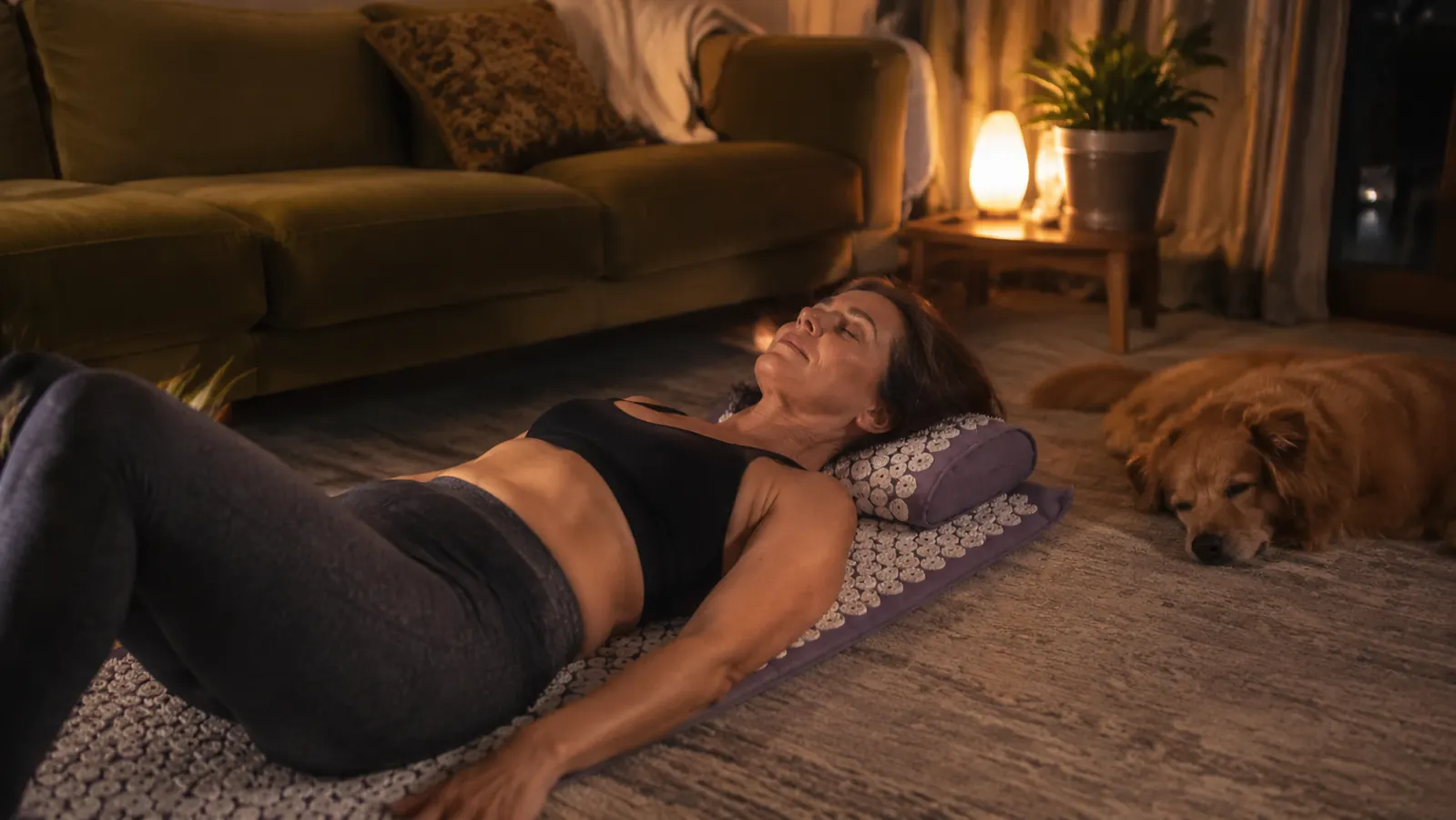
Ten years ago I would have laughed at the idea of lying down on a mat covered in hundreds of small plastic spikes and calling it recovery. These days it is part of my Tuesday and Thursday evenings, right after I walk Scout around the block for the last time. My ProsourceFit acupressure mat lives rolled up under the couch, and on a normal night I lie on my back for ten or fifteen minutes and let my shoulders sink into it while I read or half watch the news.
I also own a foam roller, the kind everyone at the gym seems to have wedged in their bag. So when people ask me which one they should actually buy for a stiff back and tight shoulders after a long hike or a full day on their feet, my honest answer is that they solve different problems. The ProsourceFit mat is a passive relaxation tool. You lie still and let it work on you. A foam roller is an active tool. You move your body across it and apply your own weight to a specific muscle. If I had to pick one for general end of day tension, I would reach for the mat. If I had a specific knot in my quad after a hike, I would reach for the roller.
I bought the ProsourceFit mat on a whim a few years back, mostly because my sister wouldn't stop talking about hers. The foam roller came earlier, a leftover from a physical therapy stint after I tweaked my hip on a hike near Sedona. Neither one was an impulse purchase I regretted, but they've ended up living in completely different parts of my week, and that split is really the whole story of this comparison.
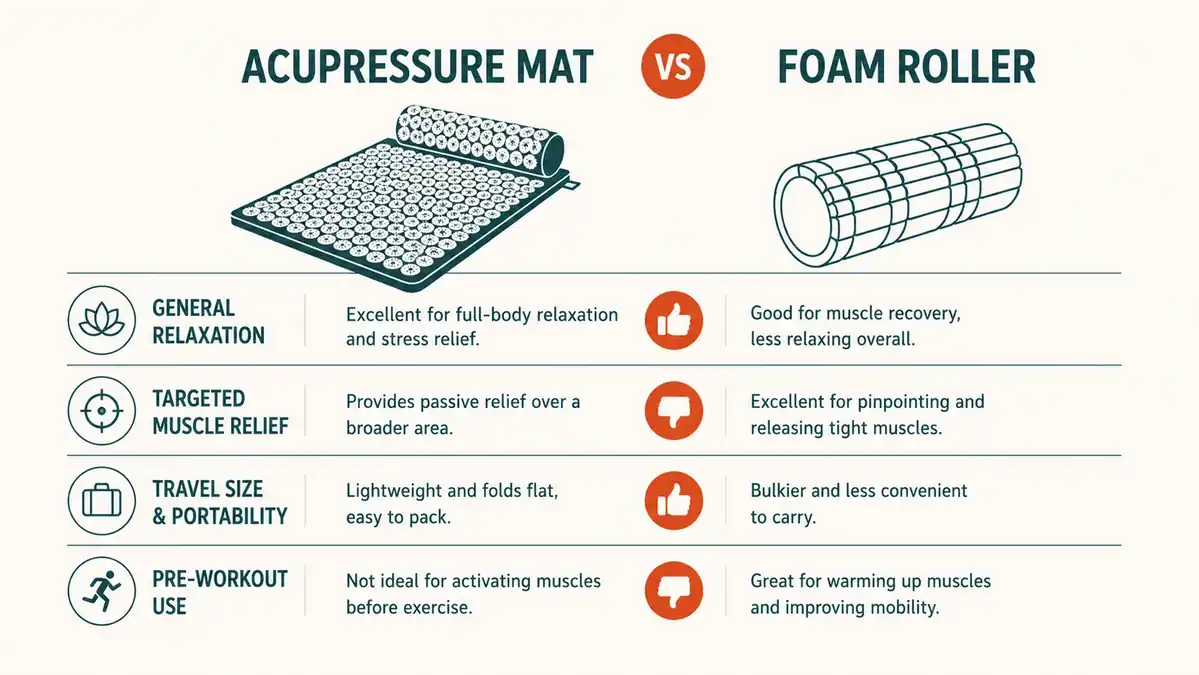
| Category | ProsourceFit Acupressure Mat | Foam Roller |
|---|---|---|
| After a long day, whole-back tension | Covers your whole back and shoulders passively in one lie-down session | Works one section of your body at a time, not built for a full-back reset |
| Ease for a first-time user | Lie down and stay still, no technique to learn | Takes a few sessions to learn the right angle and pressure |
| Effort required while using it | Fully passive, you can read or watch TV while it works | Active the whole time, you're bracing and shifting your own weight |
| Targeting one specific sore spot | Spreads pressure across a wide flat area, hard to aim at one muscle | Lets you park your body weight right on a calf, IT band, or lat |
| Use before a hike or workout | Not something I've ever reached for before heading out the door | A common warm-up to loosen muscles before you move |
| Research behind it | Mostly anecdotal, some marketing leans on meridian claims that aren't well established | More studies backing short-term flexibility gains and eased post-exercise soreness |
| Durability over years of use | Plastic points can flatten a little with heavy daily use over time | Dense foam holds its shape through years of regular rolling |
| Ready to use on the spot | Needs floor space and a few quiet minutes to lie down properly | Quick to pull out and roll a sore spot right at the trailhead or parking lot |
What Each One Actually Does
An acupressure mat like the ProsourceFit works on a simple, low-tech idea. Hundreds of small plastic points press into your skin when you lie on it, and after the first uncomfortable minute or two, most people feel a warm, tingling sensation as the muscles under those points start to loosen. Some of the marketing language around these mats leans on acupuncture and meridian theory, but I want to be straightforward about it. There isn't strong independent research proving that a spiky foam mat activates traditional acupuncture points the way a licensed acupuncturist's needles might. What the mat does seem to do, at least for me and for most of the reviews I've read, is trigger a relaxation response similar to a long, still stretch. It's a comfort and tension relief tool, not a medical treatment, and I think it's worth saying that plainly.
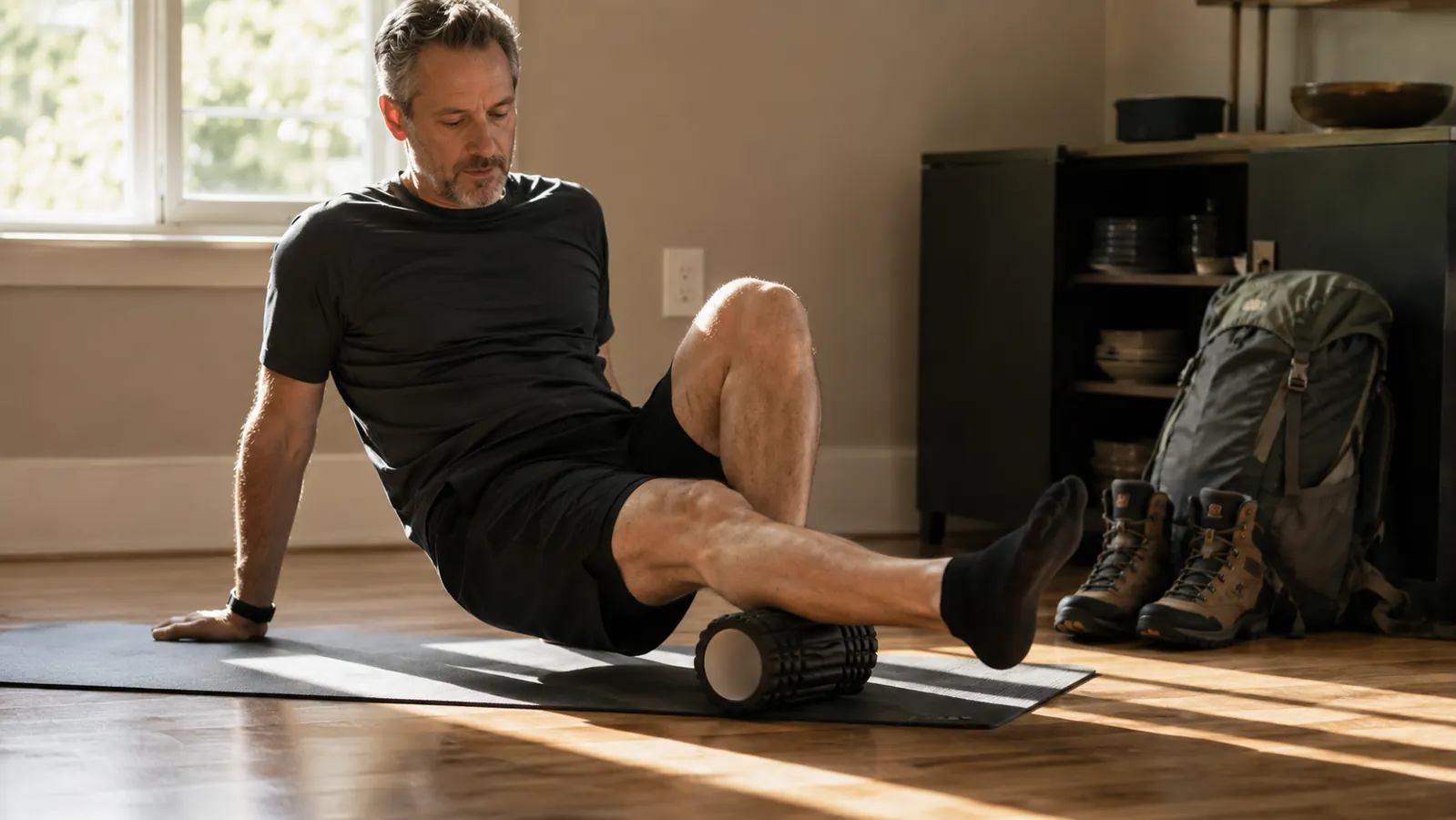
A foam roller works on a more familiar principle. You put your body weight on a dense foam cylinder and roll a specific muscle group across it, which is sometimes called self-myofascial release. There is more research behind foam rolling than there is behind acupressure mats, mostly around short-term gains in flexibility and modest reductions in muscle soreness after exercise. It won't fix a structural problem and it isn't a substitute for physical therapy, but if I've got a tight IT band after a long hike with Scout, rolling it out for a few minutes does something the mat can't. It lets me apply direct, adjustable pressure to that exact spot instead of spreading it across my whole back.
The First Ten Minutes Nobody Warns You About
I'll be honest about my first night with the ProsourceFit mat, because I think most reviews gloss over it. Lying down on it for the first time is not relaxing. It's sharp, a little alarming, and my instinct was to sit right back up. I stuck with it, mostly out of stubbornness, and by minute three the sharpness had faded into something closer to a warm buzz across my back. That first-minute discomfort is normal and it eases fast, but nobody selling these mats seems to mention it up front, and I think they should.
A foam roller has its own version of that same moment. The first time you roll over a genuinely tight spot, it can make you wince or even swear out loud in an empty room, which has happened to me more than once. Both tools ask you to sit with a little discomfort before the relief shows up. Neither one is instantly soothing the way a heating pad is, and if you go in expecting that, you'll probably be disappointed on day one with either purchase.
Where the ProsourceFit Mat Wins
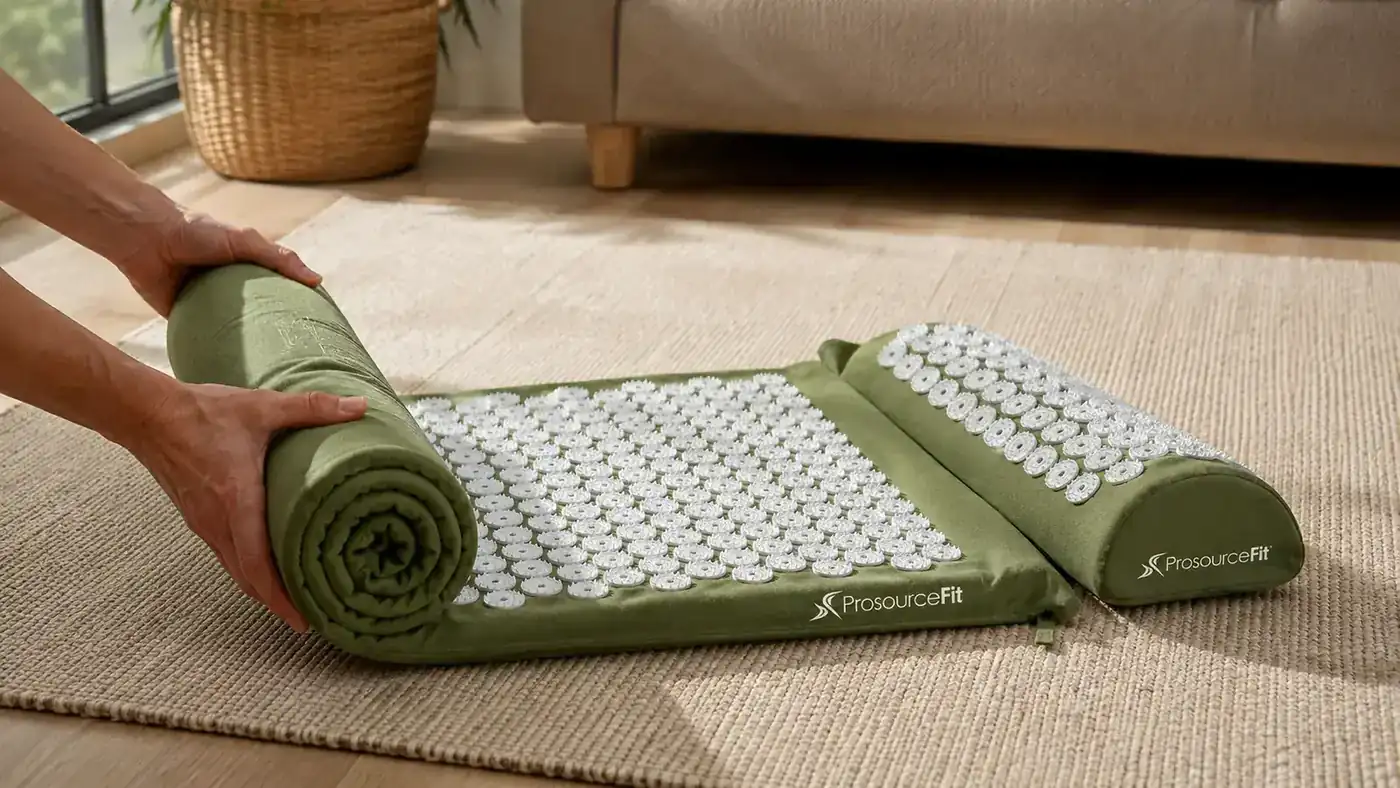
The biggest thing the ProsourceFit mat has going for it is that it asks nothing of you. On nights when my lower back is tight from a full day of yard work or a long drive back from a campsite, the last thing I want is to get down on the floor and actively work a muscle. I want to lie down, close my eyes, and let ten minutes pass. That's exactly what the mat is built for. The pillow that comes with the ProsourceFit set does the same job for my neck and shoulders, which tend to hold tension after hours in the car seat.
It also travels better than a roller. I've packed the ProsourceFit mat into a duffel bag for camping trips more than once, since it rolls down flat and doesn't take up much more room than a rolled towel. A foam roller, even the smaller travel versions, is an awkward cylinder that never quite fits anywhere in a packed car. If your main use case is general end of day relaxation and you don't want another piece of gym equipment cluttering the trunk, the mat is the easier one to actually use consistently.
Take a Sunday after a three hour hike with Scout. My legs are fine, honestly, walking is walking. It's my lower back and neck that complain, mostly from the drive there and back in a seat that never quite fits me right. That's a mat night. I unroll the ProsourceFit mat in the living room, lie down for fifteen minutes with the pillow under my neck, and by the time I get up I'm loose enough to make dinner without wincing every time I bend down to check the oven.
Where a Foam Roller Wins
Where the roller pulls ahead is precision. If you know exactly where the tightness is, a sore calf, a cranky IT band, tight lats from carrying a pack, you can put your body weight right on that spot and control the pressure by how much you shift onto it. The mat spreads its pressure across a wide, flat area, which is great for general relaxation but not something you can aim at one specific muscle the way a roller lets you.
A foam roller is also the more common pre-workout tool. A lot of people I know use a few minutes of rolling to loosen up before a hike or a workout, since it's an active warm-up rather than a lie-down-and-relax session. I've never once used the acupressure mat before heading out the door. I use it at the end of the day, not the start of it, and that difference alone tells you a lot about which one fits which moment.
Ready to Trade a Stiff Back for Ten Quiet Minutes?
The ProsourceFit Acupressure Mat and Pillow Set is the one I actually reach for on tight, sore evenings. Check today's price and current availability on Amazon.
Amazon Check Today's Price on Amazon →How I Actually Decide Which One to Grab
After using both for a few years now, I've landed on a rough rule for myself. If the tension is spread out, my whole back feels tight, my shoulders are up by my ears, my neck is stiff from sleeping wrong, I grab the ProsourceFit mat. If the tension is in one obvious place, my left calf after a steep descent, a knot under my shoulder blade from carrying a pack, I grab the roller and spend a few minutes working that spot directly. It isn't a complicated system. I just ask myself whether I can point to the sore spot with one finger or whether it's more of a general everything-is-stiff feeling.
There's also a time-of-day pattern to how I use them. The roller tends to happen in the morning or right before I head out, since it's active and gets my blood moving. The mat happens at night, usually after Scout's last walk, when I'm not trying to get anywhere, just trying to unwind before bed. If you work out in the morning and want a warm-up, lean toward the roller. If your problem shows up in the evening after a long day standing or sitting, the mat fits that slot better.
A Word on the Evidence
I want to be clear about what I'm not claiming here. The ProsourceFit mat has not treated, prevented, or cured anything for me, and I don't think it should be marketed that way. It's a relaxation tool, and for me, a genuinely pleasant one to end the day with. If you're dealing with pain that doesn't ease up, gets worse, or comes with numbness or tingling that spreads down an arm or leg, that's worth a conversation with a doctor rather than another ten minutes on a mat or a roller. Both of these tools are for everyday muscle tension after an active day, not a substitute for medical care.
Who Should Buy Which
If your problem is a generally tight back and shoulders from long days on your feet, travel, or just getting older, and you want something you can use without thinking too hard about technique, get the ProsourceFit mat. If your problem is one specific muscle that flares up after a hike or a workout and you want a tool you can actively work with, get a foam roller. I keep both in the house, but if I could only keep one for the kind of evenings I actually have, tired, achy, wanting to sit still for once, it would be the mat.
If you're weighing this out for a smaller living space or a car that's already packed for a camping trip, that's another point worth thinking through. The ProsourceFit mat rolls flat and tucks behind a couch or under a bed with no trouble. A foam roller needs its own spot in a closet or a gear bag, and it doesn't compress the way the mat does. For anyone short on storage or trying to keep their packing list lean, that alone can tip the decision.
See Why the ProsourceFit Mat Earned a Permanent Spot by My Couch
Check today's price and current reviews for the ProsourceFit Acupressure Mat and Pillow Set on Amazon.
Amazon Check Today's Price on Amazon →