
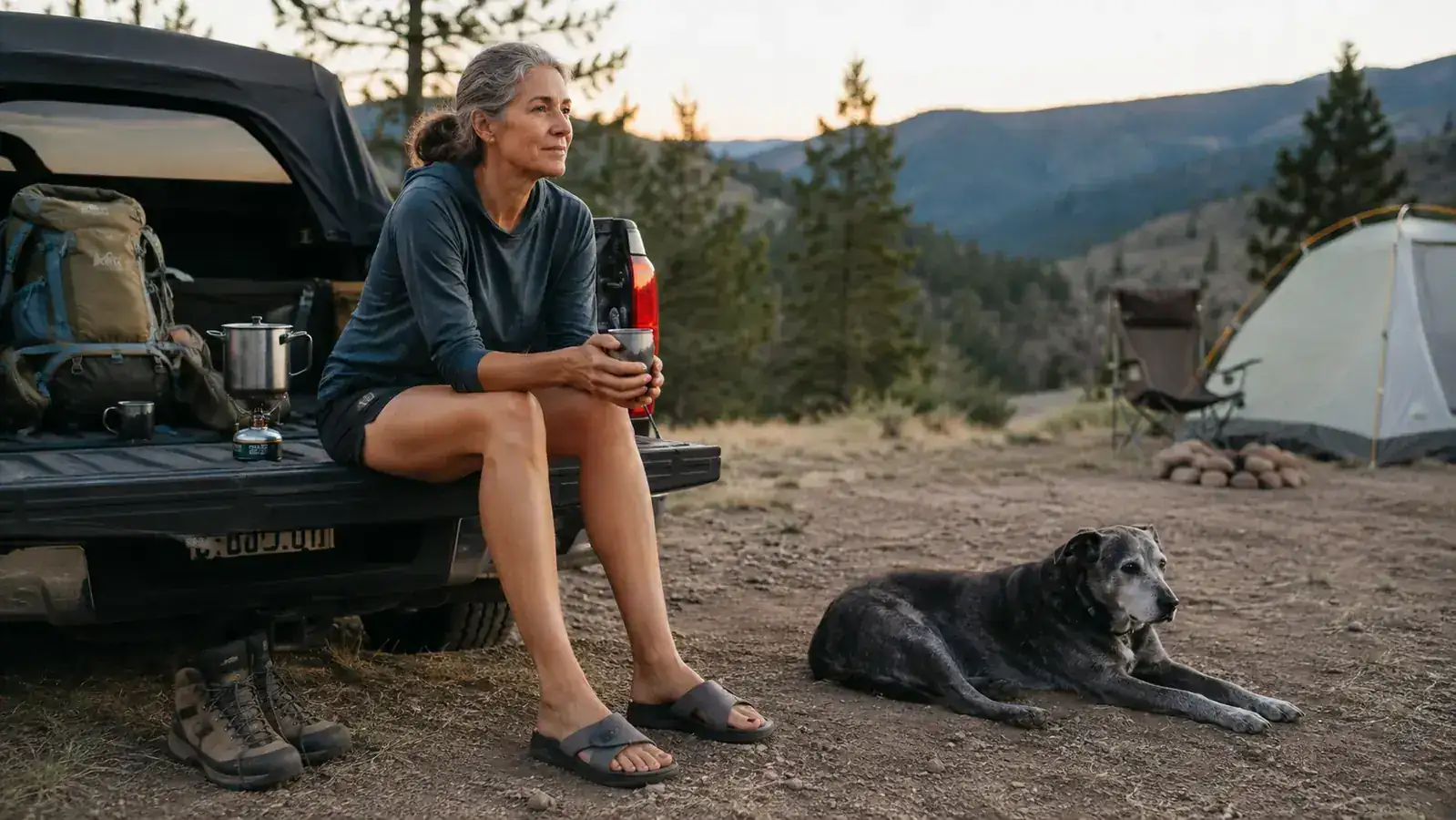
If you're trying to decide which one to buy, here's the short answer: they're not competing for the same job. A pair of regular sneakers is what gets you up the trail, across the parking lot, and through eight hours on your feet at work. OOFOS recovery slides are what your feet actually want once that work is done. I own both, I use both almost every single day, and after two camping seasons of packing them side by side in the same duffel bag, I can tell you exactly where each one earns its spot and where it falls short.
I'm 52, I hike with my dog Scout most weekends from spring through fall, and I'm not trying to set a pace record on any of it. What I'm trying to do is get through a full day outside and still want to do something that evening instead of sitting with my feet propped up wincing. The OOFOS OOahh slide became part of that routine almost two years ago, not because it replaced my sneakers, but because it does the one thing my sneakers were never designed to do: let my feet actually recover instead of just sitting there in another firm sole after they've already had enough.
| Category | OOFOS OOahh Recovery Slide | Regular Sneakers |
|---|---|---|
| Recovery Cushioning After Activity | OOfoam midsole absorbs impact and reduces pressure on tired feet at rest | Built for motion and support during activity, not for passive recovery |
| Arch & Heel Support at Rest | Contoured footbed cradles the arch and heel the moment you sit or stand still | Firm structure supports the foot in motion, feels rigid once you stop moving |
| Walking Distance / Mileage | Fine for short distances around camp, not built for miles | Designed for sustained walking and hiking distance, that's the whole job |
| Traction on Uneven or Wet Ground | Basic tread, not meant for trail, gravel, or wet rock | Real lugged outsoles grip loose dirt, wet rock, and uneven trail |
| Foot Security (Won't Slip Off) | Open slide design, foot can shift or slip out during quick movement | Laced and enclosed, foot stays locked in through any terrain |
| All-Day Standing Support | Comfortable for short stretches, not built to be worn eight hours straight | Engineered structure holds up through a full workday on your feet |
| Weather Protection | No coverage, open toe and heel, unusable in rain, cold, or rough brush | Closed, often weather-resistant, protects the foot from the elements |
| Weight & Pack Size | Light and slips flat into a duffel or the side of a daypack | Heavier and bulkier, takes up real space if you're packing a second pair |
| Ease of On/Off | Slip on in two seconds, no laces, no bending over after a long day | Laces mean sitting down and taking a minute, especially after a long hike |
Where the OOFOS Slide Wins
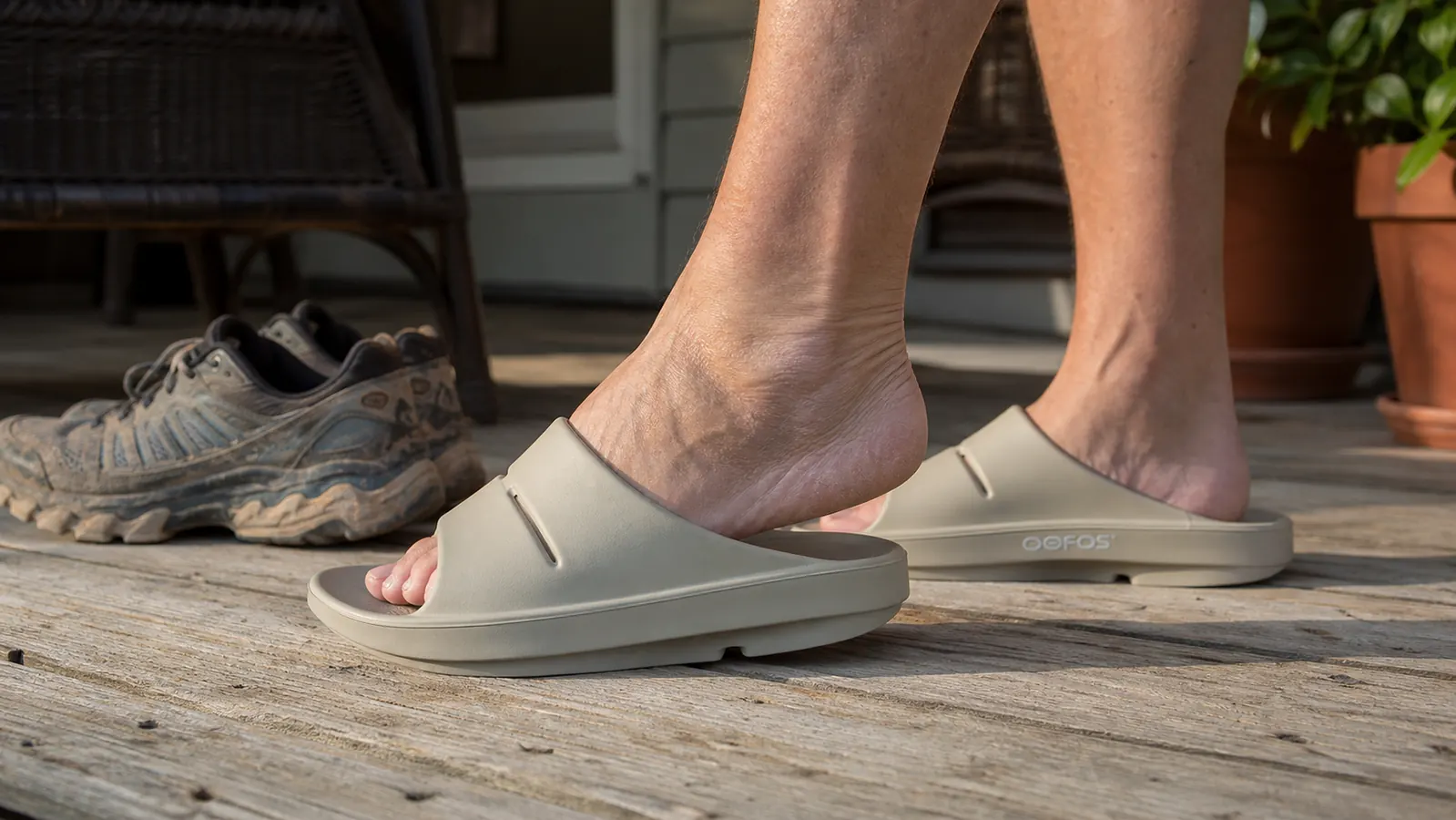
The whole reason I bought the OOFOS OOahh slide in the first place was the evening after a twelve-mile day out with Scout, when I got back to the truck and couldn't get my sneakers off fast enough. My feet weren't hurt, exactly, they were just done, that flat, achy, swollen feeling that shows up after you've been on hard ground for hours. Sitting there in the same firm sneaker sole for the drive home and the rest of the evening wasn't helping anything. Switching into the OOFOS slide the moment I got back to camp made an obvious difference, the OOfoam midsole gives under your foot instead of pushing back against it, and that's a completely different feeling than the support a sneaker gives you while you're still moving.
The other thing OOFOS gets right is how little friction there is between finishing an activity and actually recovering from it. No laces, no bending down with a stiff back after six hours of hiking, just step out of the sneakers and step into the slide. I keep a pair by the tailgate on every camping trip and a second pair by the back door at home, because the two seconds it takes to switch is exactly the kind of small habit that actually sticks. If your feet are sore enough that you're thinking about it at all, you want the barrier to doing something about it to be as low as possible, and OOFOS keeps that barrier about as low as it gets.
The OOfoam material also holds up better over time than I expected going in. Two years of daily wear, hosed off after muddy camp mornings, tossed in the truck bed more times than I'd like to admit, and the cushioning still rebounds close to the way it did the first week I owned it. I've had cheaper recovery sandals from other brands go flat and stiff within a season, which defeats the whole point of a shoe you're supposed to switch into when your feet need relief, not one that starts handing you a new kind of soreness after a few months. That durability is a real part of why the OOFOS slide earns a permanent spot by the door instead of getting replaced every summer.
Where Regular Sneakers Win
I want to be straightforward about this, because it would be dishonest not to be: regular sneakers win the actual activity itself, and it isn't close. Once you're covering real distance, on real terrain, in real weather, a recovery slide isn't in the conversation. My trail sneakers have lugged soles that grip loose gravel and wet rock the way an open slide never could, they're laced tight enough that my foot doesn't shift inside the shoe on a steep downhill, and they hold up to eight hours on my feet without the ache that comes from a soft, unstructured sole trying to do a job it wasn't built for.
There's also the weather piece, which matters more than people think until they're standing in wet grass at six in the morning in an open-toe slide. Sneakers close around the whole foot, keep out rain, cold, and brush, and give you the kind of foot security you actually need when you're moving with purpose instead of standing around camp. If I had to pick exactly one pair for a week-long hiking trip, it would be the sneakers without hesitation, because they're the ones doing the actual work of getting me up the trail and back down safely.
Sneakers also give my ankles something a slide never will, real lateral support. Coming down a rocky switchback or catching a root buried under dead leaves, a laced shoe with a structured upper stops that wobble before it turns into a rolled ankle. An open slide barely has an upper to speak of, so there's nothing holding your foot in place if it shifts sideways underneath you. That's not a knock on the OOFOS design, it's simply not what a recovery slide is built to do, but it's exactly why I'd never trade my sneakers for slides on any day that actually involves trail.
Give Your Feet Somewhere to Land After the Miles Are Done
The OOFOS OOahh slide isn't trying to replace your hiking sneakers, it's what you switch into once the hiking is over. Slip-on OOfoam cushioning that's ready the second you're back at the truck or through the front door.
Amazon See Today's Price on Amazon →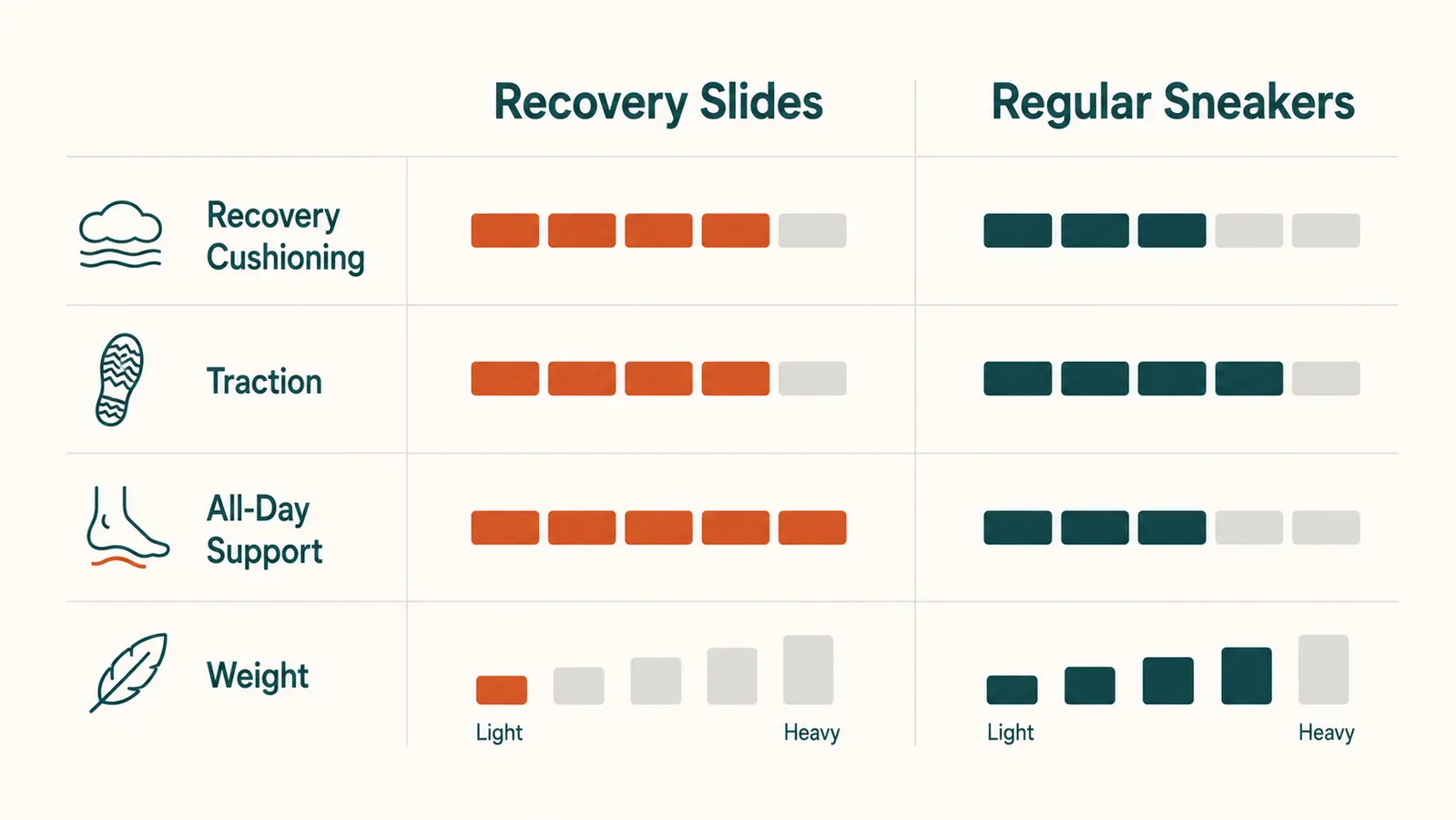
How I Actually Split Them Up
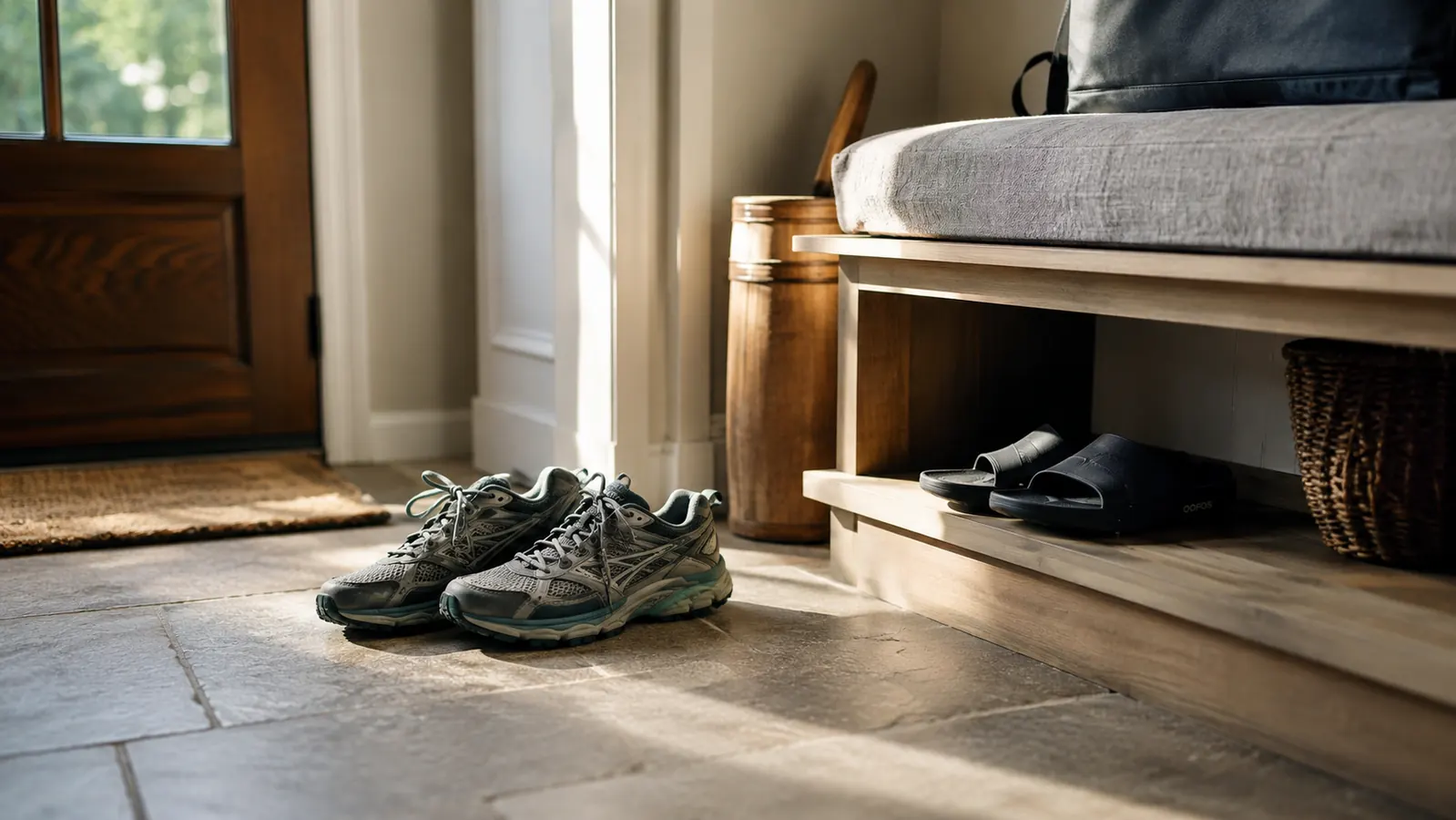
In practice this stopped being a debate for me a long time ago. Sneakers go on before the activity, whatever that activity is, a hike with Scout, a long day of errands, a shift on my feet at work. OOFOS goes on the moment that activity is finished. I don't wear the slide to walk anywhere real, and I don't wear the sneaker one second longer than I have to once I'm done needing the support it gives me. Treating them as two tools for two different parts of the day is the only way either one actually earns its keep, and it's a lot simpler than trying to find one shoe that does both jobs, because I've tried and that shoe doesn't really exist.
On a multi-day camping trip this looks almost the same every time. Sneakers laced up before we leave the tent, hiking boots or trail sneakers on for the day, and the OOFOS slides waiting in the truck for the second we're back. That five-second swap at the end of the day has become the marker in my head that the activity part of the day is over and the recovery part has started, and having a physical thing to change into helps that mental switch actually happen instead of just staying in the same shoes and same mindset until bedtime.
Mornings work the same way in reverse. I don't wear the OOFOS slides on a cold trailhead at six in the morning, even though they're sitting right there in the truck, because my feet aren't the ones that need attention yet, they're the ones about to do the work. It's only once Scout and I are back, boots off, that the slides come out. Keeping that order straight, sneakers for the doing, slides for the after, is really the whole system, and once it becomes automatic you stop even thinking about which pair to reach for.
Who Should Buy Which
If your problem is getting through the activity itself, hiking, standing all day, being on rough or wet ground, buy the sneakers first and don't overthink it. That's not what OOFOS is built for and it never claims to be. But if you already own a solid pair of sneakers and your actual complaint is what happens after, the ache once you sit down, the swelling by evening, the reluctance to do anything once you're finally off your feet, that's the gap the OOFOS OOahh slide fills. Most people I know who've settled into a real recovery routine end up owning both, because neither one covers the whole day on its own. Figure out which part of your day is actually costing you comfort right now, and start there.
One more practical note before you decide. Don't buy the slide expecting it to double as a walking shoe, and don't buy sneakers expecting them to feel good the second you sit down after a long day, because neither one was designed to cover the other's job. I made that mistake with a cheaper recovery sandal years ago, tried wearing it on a two-mile loop around a lake, and regretted it by the halfway point. Buy each one for what it's actually built to do, sneakers for the miles, OOFOS for the recovery afterward, and you won't end up disappointed in either.
Your Sneakers Get You There. This Is What Happens After.
The OOFOS OOahh Recovery Slide is the one waiting by my tailgate on every trip, easy on, easy off, and built to give your feet somewhere soft to land once the day's actual work is done.
Amazon Check Today's Price on Amazon →