
Every acupressure mat listing I read used the same breathless language: melts away tension, releases blocked energy, changes your evenings for good. I still went and ordered the ProsourceFit set, curious more than convinced, after a stiff neck from a rough night in a tent had me looking for anything that might help, and what I want to write here is the review I wish someone had handed me first. Not the one that promises instant results, the one that tells you what the first ten sessions actually feel like and how much weight to put on the claims behind the whole idea.
I'm 52, active most weeks between hiking with my dog Scout and standing on my feet doing yard work I probably shouldn't still be doing myself, and I've tried enough recovery gadgets to know the difference between something that helps and something that's just novel for a week before it lands in a closet. This isn't a takedown of the ProsourceFit mat. I still use it. But if you're deciding whether to buy one, you deserve the parts of the story most reviews gloss over, starting with how genuinely uncomfortable the first several sessions are.
The Quick Verdict
A relaxation tool that does help once you push through a genuinely rough start, but the pressure-point claims behind it are thinly supported and part of the benefit is likely just twenty quiet minutes on the floor.
Amazon Check Today's Price →The First Two Weeks Are Rough. Here's What I'd Want to Know Before Buying.
If you're weighing whether to try the ProsourceFit acupressure mat and pillow set, this is the honest version, including the parts most listings leave out.
Amazon Check Today's Price on Amazon →How I Actually Tried It
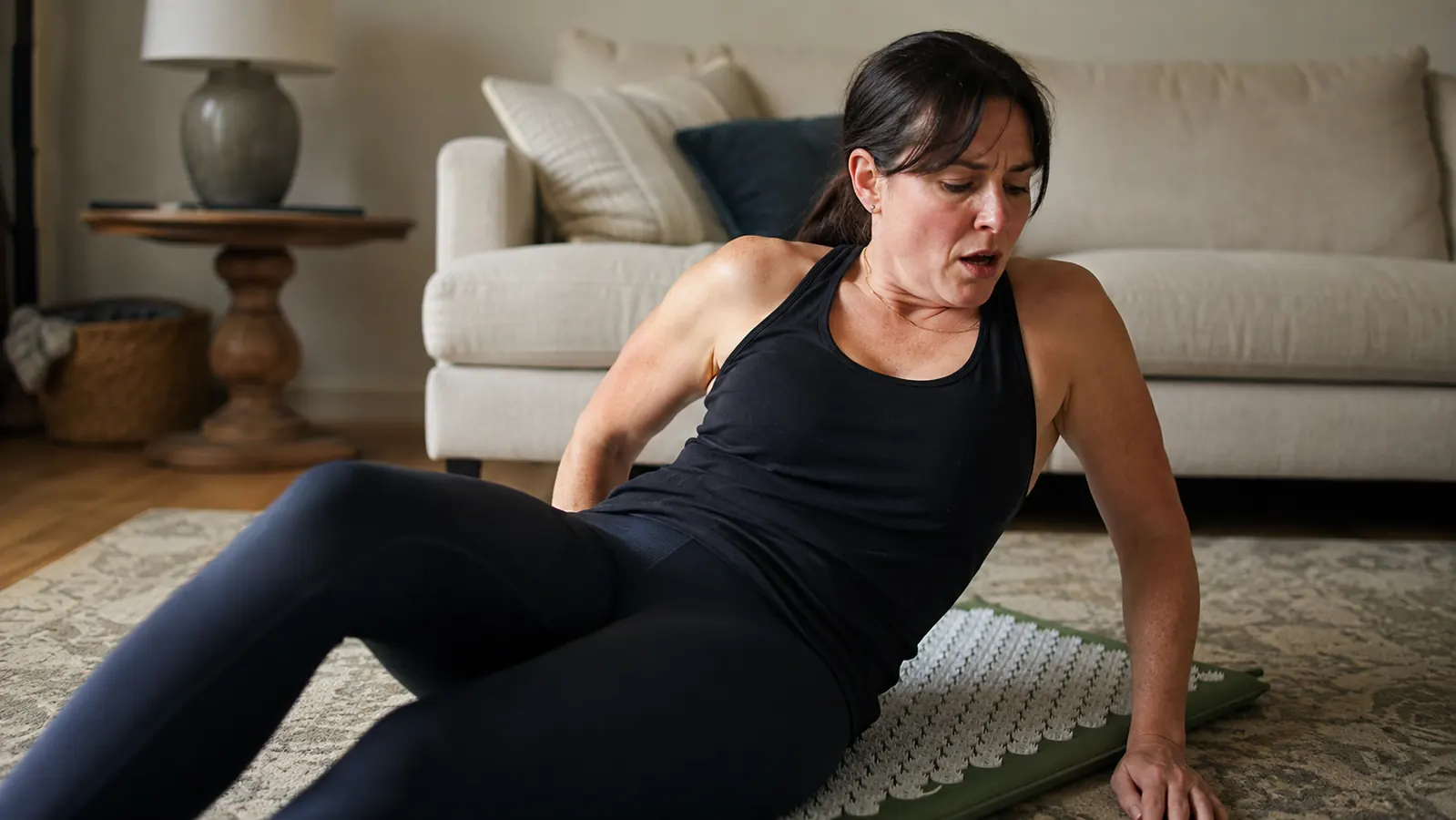
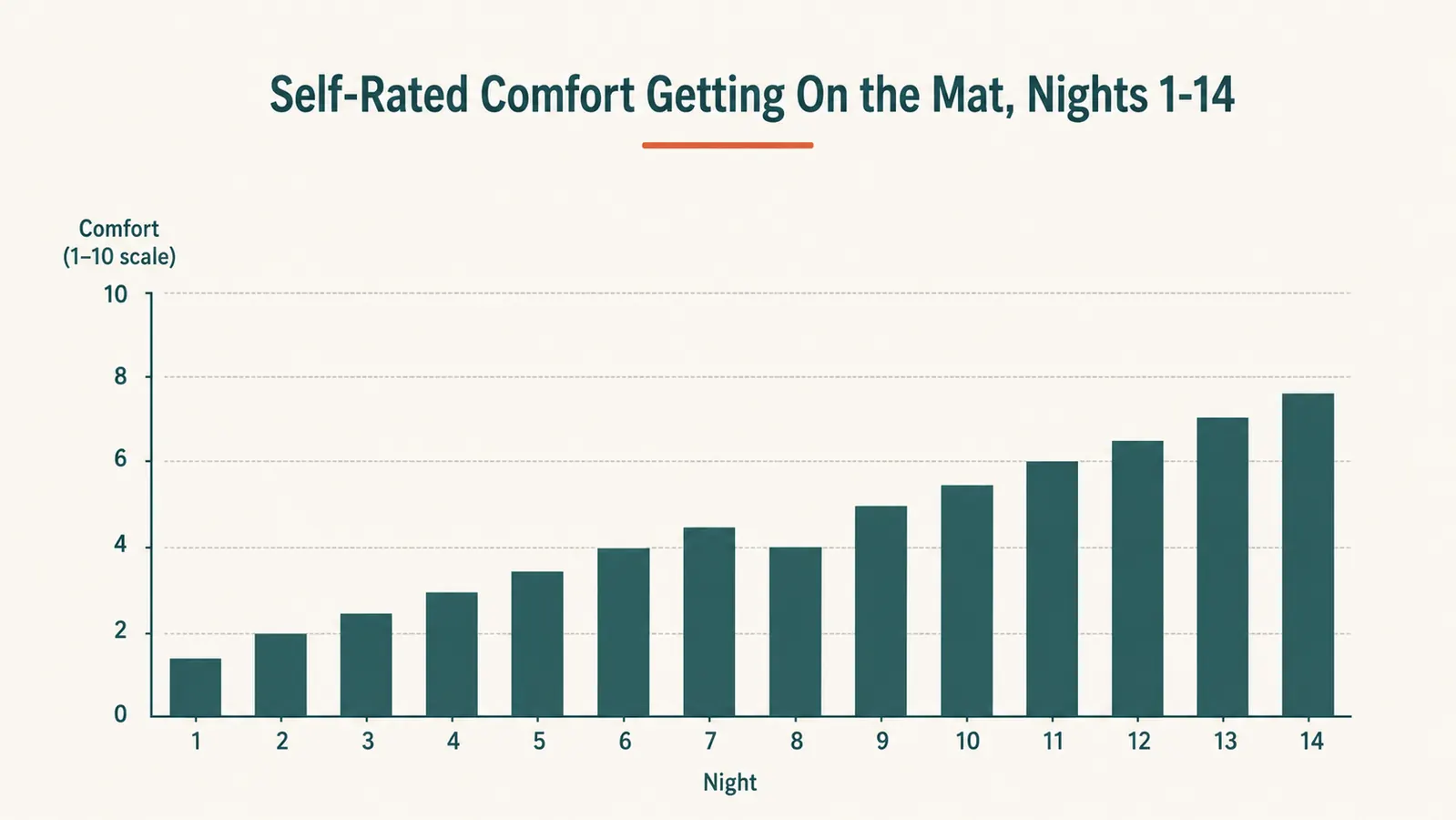
The first night I lay back on the ProsourceFit mat, I made it about ninety seconds before I sat back up. Not because anything was wrong with it, the mat is exactly the spiky foam and plastic tile mat it's supposed to be, but because nothing in the product photos prepares you for what several thousand plastic points pressing into bare skin actually feels like the first time. It's sharp, it runs hot in a strange way, and my instinct every single time was to get up immediately. I didn't get through a full session until night four.
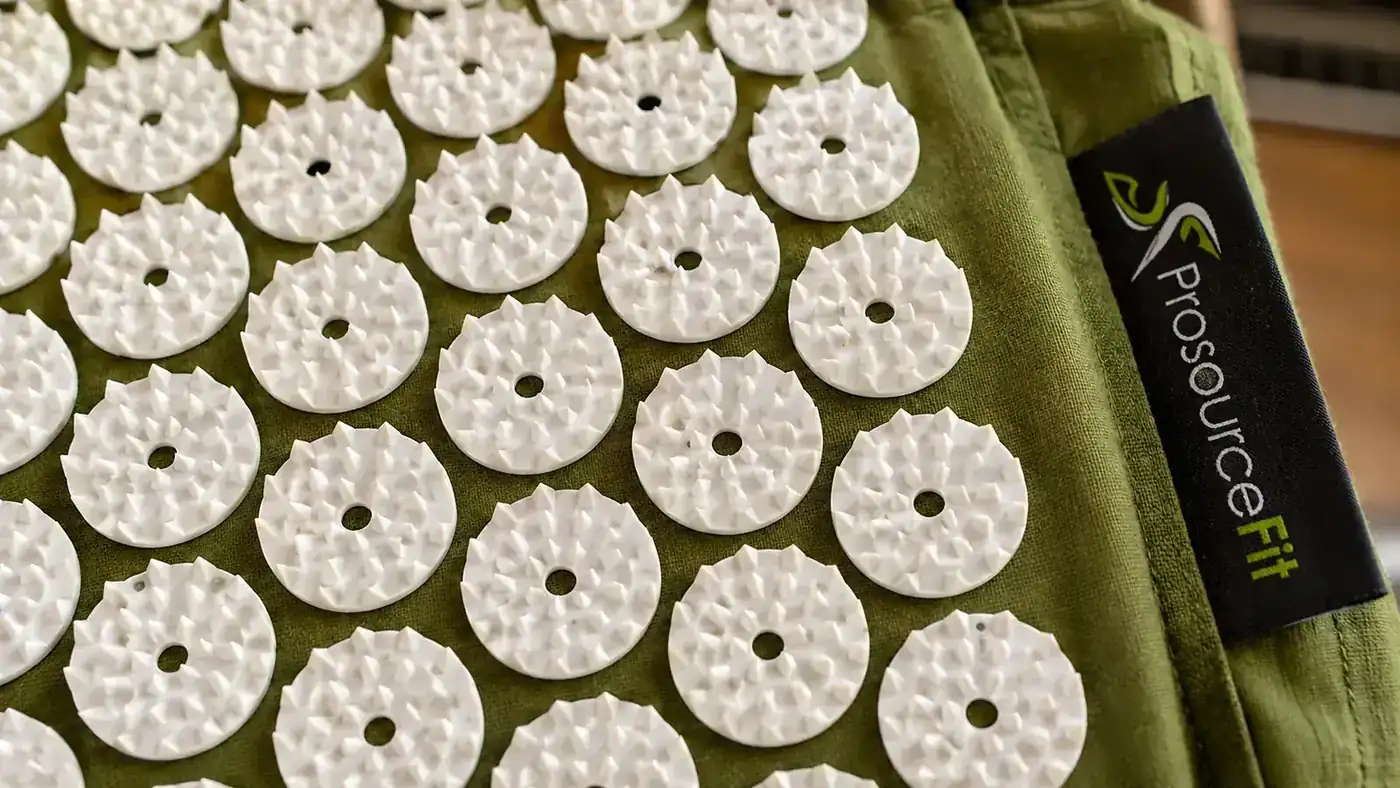
There were two other things nobody warned me about. First, the smell. Straight out of the packaging, the ProsourceFit mat had a strong plastic odor that lingered in the room for closer to two weeks in my case, not the couple of days some reviews mention, probably because I keep windows shut more than most people. Second, within the first month I noticed a couple of the tiny plastic points on two separate tiles had snapped off and were sitting on the rug when I rolled the mat back up. It didn't change how it felt to lie on and it never got worse after that, but it's the kind of small imperfection that doesn't show up in a five-star headline.
By around the sixth or seventh time, lying down on it stopped being something I had to talk myself into. It never became something I'd call pleasant in the way people describe a massage. It's more accurate to say the sharpness faded into an ache I could sit with, and eventually into something closer to steady pressure. If you're picturing a spa treatment, recalibrate that expectation now, because that gap between what the product photos suggest and what the first two weeks actually feel like is where I think most of the one-star reviews come from.
The Research Is Thinner Than the Marketing Suggests
A lot of the copy around acupressure mats leans on the idea of pressure points and energy pathways from acupuncture traditions, and I want to be straightforward about where I land on that. I'm not a doctor or a researcher, and I'm not going to repeat those claims as if they're settled science. The clinical research on acupressure mats specifically is limited, the existing studies are mostly small, and I haven't seen anything that would let a company or a reviewer honestly claim a mat like this treats or cures anything. What research does exist tends to look at short-term relaxation and mood, not long-term pain relief, and even that is far from conclusive.
That thinness matters for how you read every glowing review online. Feeling looser after twenty minutes on a field of plastic points doesn't prove the specific pattern of pressure is doing anything unique. It could just as easily be the by-product of lying still, breathing slowly, and giving your nervous system twenty minutes without a phone in your hand. I don't think that's a small thing. I just don't think it's the same as a proven treatment, and I'd rather tell you that upfront than let you buy this expecting clinical results it hasn't earned.
It's also worth being skeptical of your own five-star review before you write one. Once you've spent effort pushing through two uncomfortable weeks to make something work, there's a natural pull to justify that effort by deciding it worked. I noticed that pull in myself, and I've tried to separate what I actually felt physically from what I wanted to believe I'd gotten for the trouble. That's not a knock on anyone who loves their mat. It's a reason to read enthusiastic reviews, including this one, with a little distance.
Why So Many People Quit in the First Week
My neighbor Carol bought a similar mat after seeing mine and lasted exactly three sessions before it ended up folded in her hall closet. She told me the sensation never stopped feeling like something she was enduring rather than something she was enjoying, and she didn't have the patience to find out whether that would change. I think Carol represents a real, sizable chunk of the people who buy one of these mats and never write a review at all, because they quit before they got far enough to have an opinion worth sharing.
If you look at the one and two-star reviews on almost any acupressure mat, a pattern shows up. Most of them aren't complaints about the product breaking or being poorly made. They're some version of this hurt and I stopped using it. That's not a defect, it's how the product is designed to feel at first, but it means the honest odds of this working for you depend heavily on whether you're willing to sit with real discomfort for a week or two before deciding it isn't for you. A lot of people, understandably, aren't.
I don't think there's anything wrong with quitting early either. Pain tolerance is personal, and pushing through sharp discomfort just because a product promises it gets better isn't always the right call, especially if something about it genuinely feels wrong rather than just intense. The difference between a normal rough start and a sign to stop is worth paying attention to on its own terms, not powering through blindly because a mat's packaging said to expect it.
A Few Things That Made the First Two Weeks Easier
A few small adjustments made the early sessions more bearable, and none of them showed up in the instructions that came with the ProsourceFit set. Wearing a thin t-shirt for the first handful of sessions instead of going straight to bare skin took some of the edge off without eliminating the pressure entirely, and it let me build tolerance gradually instead of all at once. I switched to bare skin around week two, once the initial sharpness had mostly faded on its own.
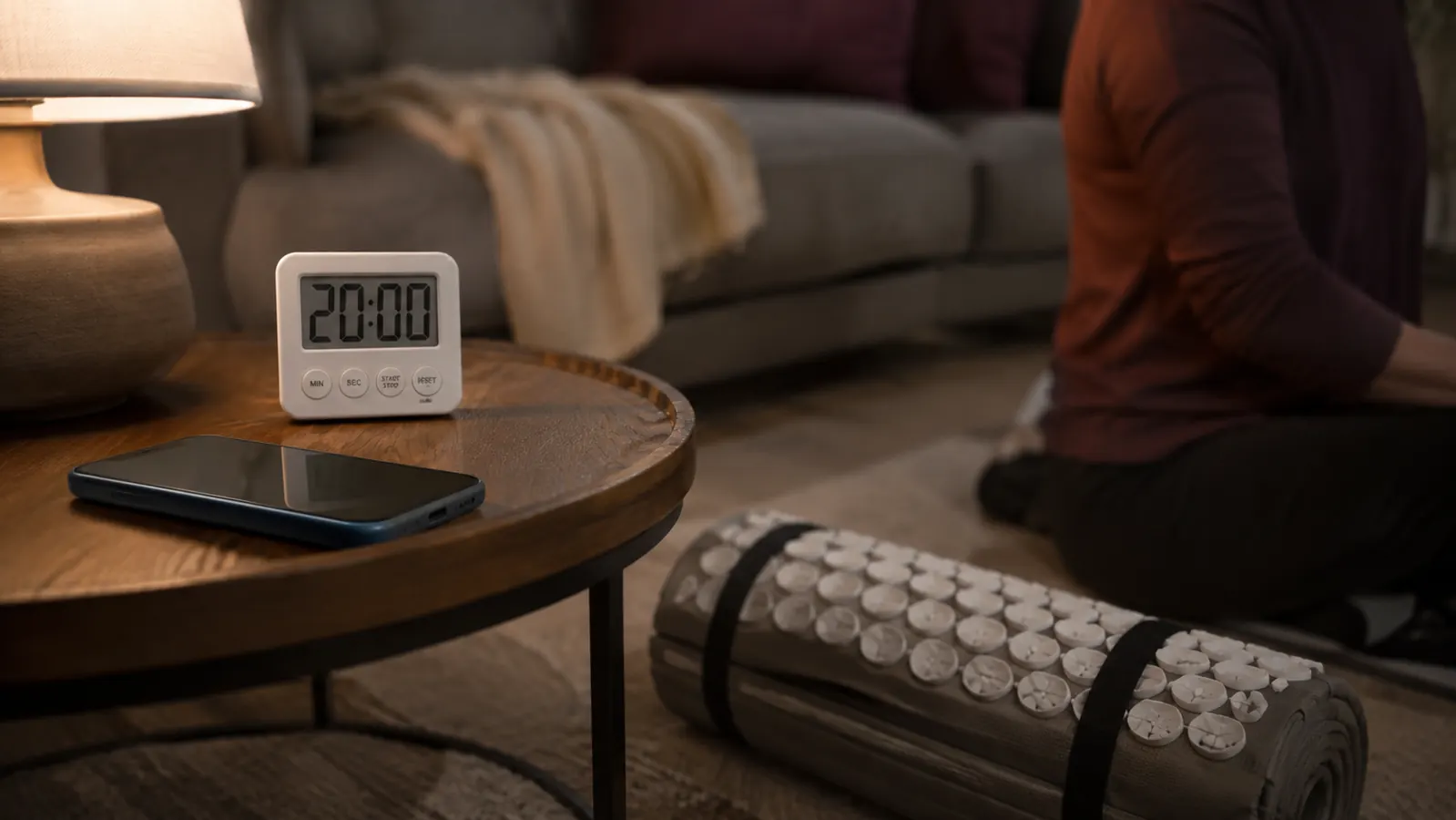
Starting with five minutes instead of the full twenty also helped more than I expected. I'd assumed cutting the session short defeated the purpose, but stretching the time out gradually over the first week meant I actually kept coming back instead of dreading it enough to quit the way Carol did. If you're going to try one of these, I'd start there rather than gritting your teeth through a full twenty minutes on night one out of stubbornness.
The Honest Theory: It's Mostly Twenty Quiet Minutes
Here's the theory I've landed on after using this mat long enough to have an opinion, and it's less dramatic than what most product pages suggest. I think a meaningful part of what people feel afterward comes from the twenty minutes of forced stillness, not the specific geometry of the plastic points. I'm bad at sitting still without a task in front of me. Lying on it is really just an excuse to stay on the floor with my eyes closed, breathing, because standing up early always feels like quitting rather than resting.
If that's true, and I think it's at least partly true, it doesn't mean the mat is pointless. It means the honest pitch for it is different than the one usually made. This isn't a targeted fix for a bad shoulder or a proven pain treatment. It's a structured excuse to be still for a short stretch of your evening, with a physical sensation intense enough that you can't easily scroll through your phone while it's happening. For some people that's genuinely valuable. For others, a timer and a plain yoga mat on the floor would do a similar job with none of the learning curve.
What Nobody Mentions Before You Buy
The pillow that comes with the ProsourceFit set is a different animal than the mat itself. Its points are smaller and packed tighter, and on my first try it felt sharper against my neck than the mat ever felt against my back. It took me almost as long to get used to the pillow as it did the mat, and I'd tell a first-time buyer to expect that rather than assume neck skin is somehow tougher than back skin. It isn't, at least not in my experience.
The mat itself also runs narrower across the shoulders than the photos make it look. If you're broad-shouldered or you tend to shift side to side while you're on it, part of you can hang off the edge of the points, which changes the sensation from even pressure to a couple of concentrated hot spots instead. That's not a flaw exactly, it's just something worth knowing before you assume it'll blanket you evenly the way a full-body mat implies in the marketing photos.
Room temperature changes the experience more than I expected too. On cooler evenings, the plastic points feel noticeably sharper against skin that hasn't warmed up yet, and I get more out of a session if I've been up and moving beforehand rather than lying straight down after sitting still for a while. It's a small variable, but if your first try happens to land on a cold night right after a stretch of sitting still, don't assume that's the mat's ceiling.
What I Liked
- The routine itself, once you push past the rough start, genuinely helps you slow down at the end of the day
- Works as a stillness tool even if you're skeptical of the specific pressure-point claims
- Build quality held up overall despite two small breakages I noticed early on
- Packs down small enough to bring the habit along on a trip
Where It Falls Short
- The first one to two weeks are genuinely uncomfortable, not a gentle warm-up like some listings suggest
- Strong plastic smell out of the box that can linger longer than expected depending on how you ventilate the room
- A couple of tiny plastic points broke off two tiles within the first month for me
- The evidence behind the specific pressure-point claims is thin, so keep your expectations proportional
- Pillow points feel sharper than the mat's and take separate getting used to
A lot of what people feel afterward probably comes from the twenty minutes of forced stillness, not the specific geometry of the plastic points.
Who This Is For
This makes sense for someone who's curious about a structured stillness habit and doesn't mind an uncomfortable first couple of weeks to get there. If you already know you'll quit at the first sharp sensation, this probably isn't going to change your mind about that, but if you can commit to giving it two solid weeks before judging it, there's a real chance you land somewhere similar to where I did, not converted to the pressure-point theory, but genuinely fond of the twenty minutes it buys you at the end of a long day.
It also makes sense if you already have some kind of end-of-day wind-down and want a low-effort way to make yourself actually keep it, rather than skip it the way I do with stretching some nights. The forced discomfort, oddly enough, is part of what makes it easier to stick with than something purely pleasant. You notice when you skip it because you miss the twenty minutes off your phone, not because you miss the sensation itself.
Who Should Skip It
Skip this if you have a nerve condition, diabetes, poor circulation, a skin condition, or any concern where pressure or a sharp sensation on your skin could cause a problem you might not notice happening, and check with a doctor first if you're unsure. It's also not the right call if what you're dealing with goes beyond ordinary end-of-day tightness, pain that keeps returning, feels sharp, or seems to be building rather than easing, that's worth a doctor's opinion regardless of which mat or gadget you're weighing. And if you know from experience that discomfort makes you abandon things fast, it's fair to expect that pattern to repeat here too.
Rough First Week, Honest Verdict, Still On My Living Room Floor
I wouldn't call this a cure-all and I don't think the research supports calling it one either. But as a nightly reason to lie still for twenty minutes, it's earned its place. This is the same ProsourceFit mat and pillow set I've been describing.
Amazon Check Today's Price on Amazon →