
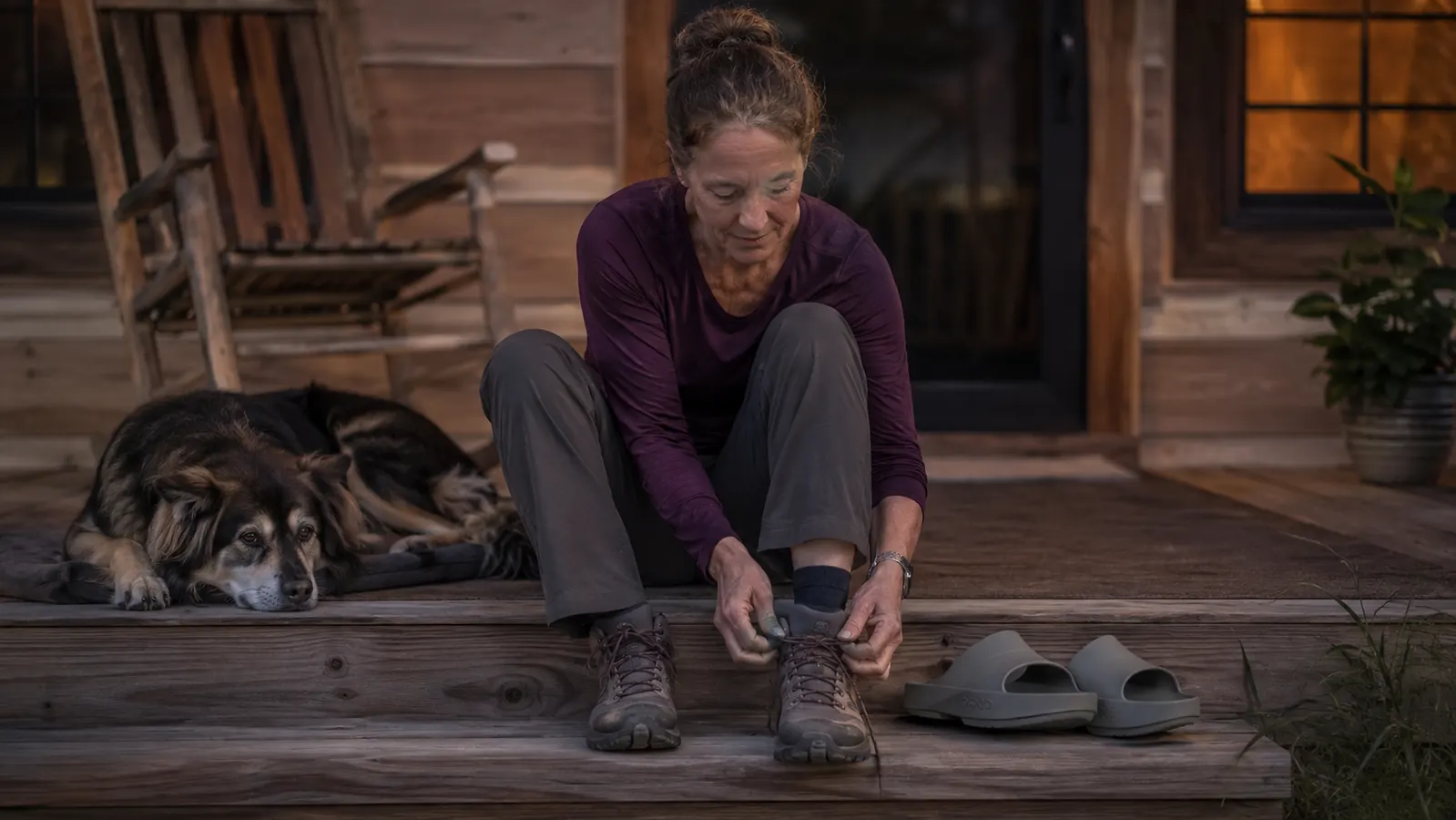
For years my end-of-day routine for tired feet was basically nothing. I'd get home from a long hike with Scout, or finish a six-hour shift at the farmers market stall I help run on Saturdays, and just sit down in whatever shoes I already had on until I remembered to take them off. My feet stayed achy well into the evening, and some nights the soreness was still there in the morning. What actually changed things was less about any single product and more about building a short, repeatable routine around a pair of OOFOS OOahh recovery slides instead of just kicking my shoes off and hoping for the best. It sounds small, but having an actual order of operations made a bigger difference than I expected it to.
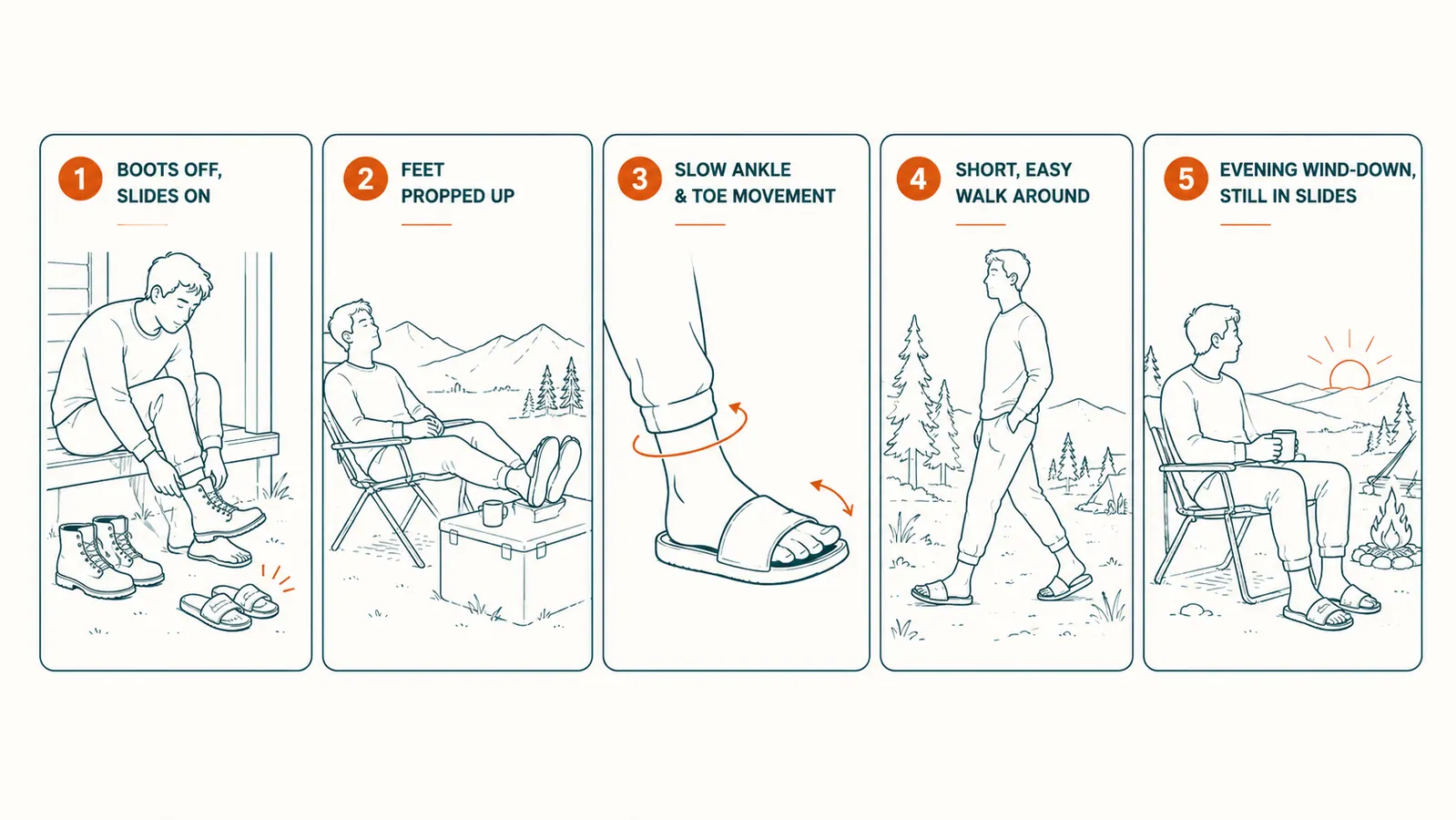
This isn't complicated and it isn't long. It's five steps, about fifteen minutes total, and I do a version of it whether I'm home, on the road, or at a campsite with Scout stretched out beside the fire. What I'm describing here is ordinary end-of-day foot fatigue, the kind that comes from being on your feet for hours, not a diagnosed foot condition. If you're dealing with pain that doesn't ease up with rest and a comfortable shoe, that's worth a conversation with a doctor rather than a routine like this one. Think of this as maintenance, not treatment.
The Slides That Made This Routine Actually Stick
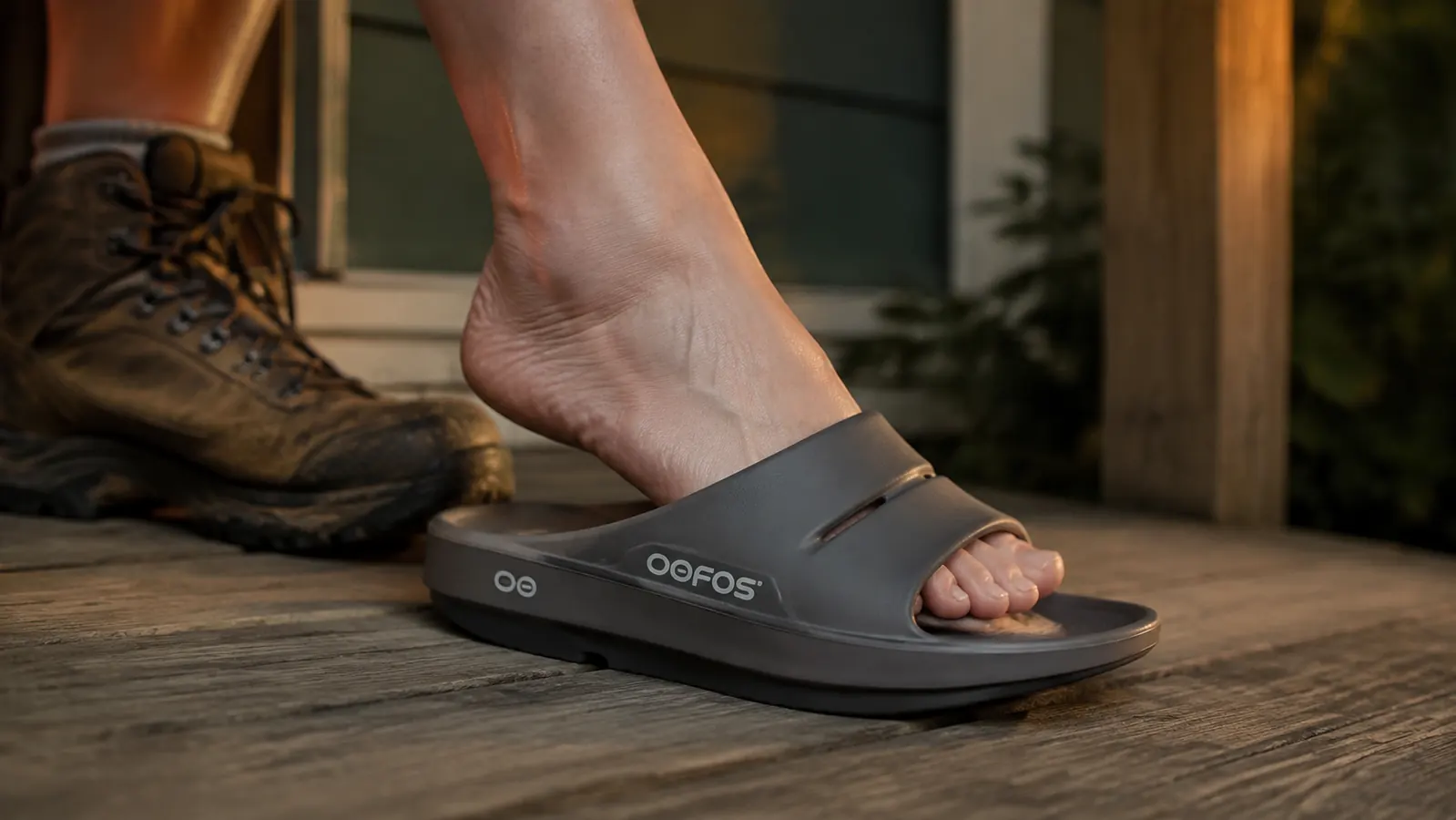
This is general comfort content, not medical advice. I built this routine around a pair of OOFOS OOahh recovery slides because the deep heel cup and foam gave my feet somewhere soft to land, the first thing that made me want to keep doing this every evening instead of skipping it. Check today's price and current sizing before your next long day on your feet.
Amazon Check Today's Price on Amazon →Step 1: Get Out of Your Day Shoes the Moment You're Done
The single biggest change I made wasn't a stretch or a soak, it was timing. I used to leave my boots or sneakers on for another hour or two after activity ended, whether that meant sitting around the fire still laced up or standing at the truck packing gear. Now the boots come off within a few minutes of the day's activity being over, and the OOFOS slides go on right away, before my feet have had time to swell or stiffen further.
That timing matters more than I expected it to. Feet that sit swollen inside a firm shoe for an extra hour seem to take longer to settle down later, at least in my own experience. Getting into something soft and open, with a deep heel cup instead of a snug shoe wall pressing in, seems to give the fatigue somewhere to ease off from the start rather than building on top of itself through the evening.
At camp this means my OOFOS slides sit right by the tent flap, not buried in a duffel bag. At home they're by the back door. If I have to hunt for them, I don't bother, and the whole routine falls apart before it starts. Keeping them within reach is honestly half the discipline of doing this consistently.
I learned this the hard way after a market Saturday last summer, when I left my sneakers on through breakdown and loading the truck because I couldn't find my slides in the back seat. By the time I got them on at home, my feet felt tight and puffy in a way they usually don't, and it took closer to an hour of the full routine to get back to normal instead of the usual fifteen minutes. Now I keep a spare pair in the truck specifically so that excuse doesn't happen again.
Step 2: Prop Your Feet Up for Ten Minutes, Slides Still On
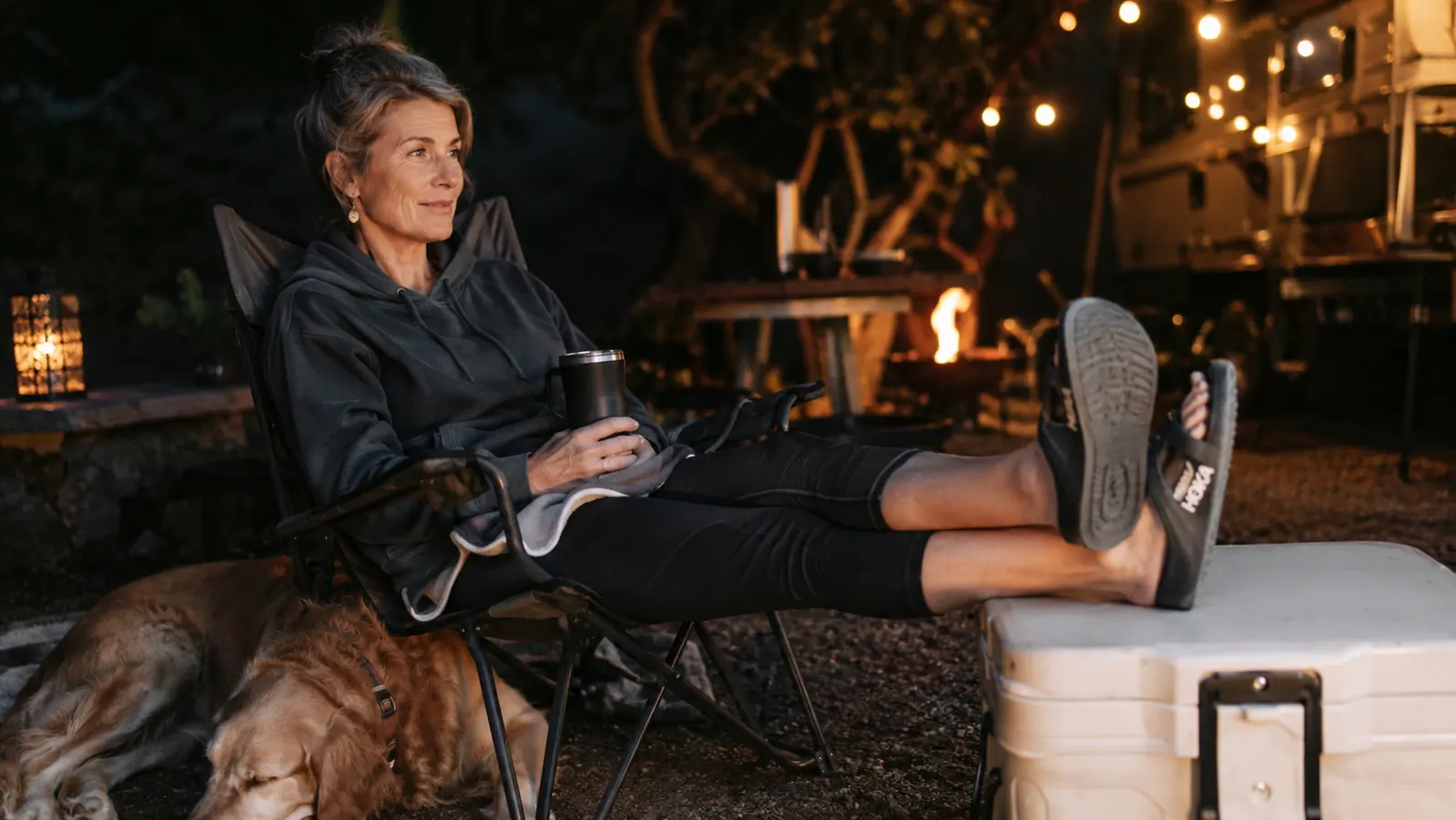
Once the OOFOS slides are on, I sit down and get my feet up above heart level for about ten minutes if I can manage it, on a cooler at the campsite, on the arm of the couch at home, on a stack of folding chairs at the market stall on a slow afternoon. This isn't anything exotic, just gravity doing some of the work that a full day of standing or walking undoes.
Doing this while wearing the slides rather than barefoot changes the feel of it in a way I didn't expect. The foam still cradles the heel and arch even with your legs elevated, so it doesn't feel like you're just resting your feet on a hard surface waiting for the swelling to go down. It feels more like the foot is still being supported the whole time, just from a different angle.
Ten minutes is the number that works for me, but I've stretched it to twenty on the worst days, usually after a long hike with a full pack or a market Saturday that ran longer than planned. I keep a water bottle within reach during this step too, since I notice my feet feel worse overall on days I haven't had enough to drink, fatigue and dehydration seem to compound each other for me. Some evenings I'll use this window to go through the day's photos on my phone or just sit quietly with Scout, which makes the ten minutes feel less like a chore and more like the first real break of the day.
Step 3: Slow Ankle Circles and Toe Spreads
After the ten minutes elevated, I bring my feet back down and do a slow round of ankle circles, maybe ten in each direction per foot, followed by spreading and curling my toes a few times. This still happens in the OOFOS slides, since the strap is loose enough across the top of the foot that it doesn't restrict the movement at all, even with my feet slightly swollen from a full day out.
This step is short, maybe two minutes total, but it's the one I notice the most if I skip it. Feet that have been locked into the same position inside a boot for hours tend to feel stiff even after they've had a chance to rest, and a little deliberate movement seems to loosen that stiffness in a way that just sitting still doesn't. I'm not doing anything intense here, just slow, easy circles, nothing that should ever feel sharp or painful.
My husband started doing a version of this too after a long day moving mulch and firewood in the yard, minus the OOFOS slides at first, and he noticed enough of a difference that he now keeps his own pair by the garage door. It's a small step, but it's the one that seems to bridge the gap between propped-up rest and actually moving normally again.
Step 4: Take a Short, Easy Walk in the Slides
Once my feet feel less locked up, I get up and take a short, unhurried walk, around the campsite, around the yard, or just to the kitchen and back a few times if I'm home. This is maybe five minutes, and it's still in the OOFOS slides, which is a little counterintuitive since they're built for standing and recovery rather than distance walking, but for a slow lap around a flat, familiar space, they do the job fine.
The point of this step isn't exercise, it's circulation. Feet that have been elevated and still for a while sometimes feel a bit disconnected when you first stand back up, almost numb around the edges. A short, easy walk seems to reset that faster than just standing around or sitting back down right away. I keep it slow and flat on purpose, no uneven trail sections or gravel scrambles, since the OOFOS platform is soft and not meant for that kind of terrain.
At camp this is usually a slow loop with Scout to check the fire and the cooler, nothing that would count as real activity. At home it's often just wandering the kitchen while I start dinner. Either way, by the end of these five minutes my feet generally feel more like they're back under me instead of just recovering off to the side, ready for whatever the rest of the evening actually needs from me.
Step 5: Stay in the Slides Through the Evening Wind-Down
The last step is really just restraint, staying in the OOFOS slides for the rest of the evening instead of switching into something tighter or going barefoot on a cold floor. I used to change into regular house shoes or slippers a couple hours after activity ended, thinking my feet had done their recovering already, but I noticed the ache would sometimes creep back in by bedtime on the days I made that switch too early.
Keeping the slides on through dinner, through cleanup, through sitting by the fire or on the couch, seems to give the fatigue a full runway to actually settle rather than getting interrupted partway through. It's a small thing, but it's the difference between waking up feeling mostly fine and waking up with that same lingering soreness from the day before, at least based on what I've noticed across a lot of evenings testing this out.
The whole routine, start to finish, runs about fifteen minutes of active steps plus however long I choose to just sit in the slides afterward, which is usually the rest of the evening. It's not complicated, it doesn't require any special equipment beyond a pair of recovery slides worth trusting, and it's become as automatic to me now as brushing my teeth or letting Scout out one last time before bed.
What Else Helps
The routine above handles the end of the day, but a few other habits stack on top of it. I try to drink more water on days I know I'll be on my feet a lot, since dehydration seems to make the fatigue worse and slower to fade. I also pay attention to how worn my hiking boots or work shoes are getting, since tired, unsupportive footwear during the day seems to leave my feet more depleted by the time I get to the recovery part of the evening, no matter how good the slides are afterward.
Socks matter more than I used to give them credit for too, thinner, sweat-soaked socks by the end of a hot day seem to leave my feet more worn out than a fresh, cushioned pair I can change into before I even get to the slides. None of this is medical advice, and if foot pain is sharp, doesn't improve with rest, or sticks around day after day, that's worth having a doctor look at rather than working around it with a routine like this one. What I'm describing here is ordinary tiredness, not a treatment for anything more serious.
The routine doesn't fix what happened to your feet during the day. It just gives them fifteen honest minutes to actually recover from it, instead of sitting sore in whatever shoe was already on.
The First Step in This Routine Only Works if the Slides Are Actually Good
I use a pair of OOFOS OOahh recovery slides for this whole routine because the deep heel cup and foam hold up evening after evening, not just the first week. Check today's price and available sizes before your next long day on your feet.
Amazon Check Today's Price on Amazon →