

I read something like forty Amazon reviews before I ordered a stretching strap, skimmed past most of the fair warnings buried in them, and still made two mistakes in my first week that a little more patience would have avoided. This isn't the long, month-by-month diary of my routine, I've already written that one elsewhere on this site. This is the part nobody puts in a five-star headline: what the listing photos don't show you, the two things I got wrong early on, and why some of the one-star reviews for this strap aren't actually wrong, they're just aimed at people who bought the wrong tool for what they needed. The two mistakes cost me almost two weeks of half-effort before things clicked, and I'd rather hand that timeline to you upfront than let you rediscover it yourself.
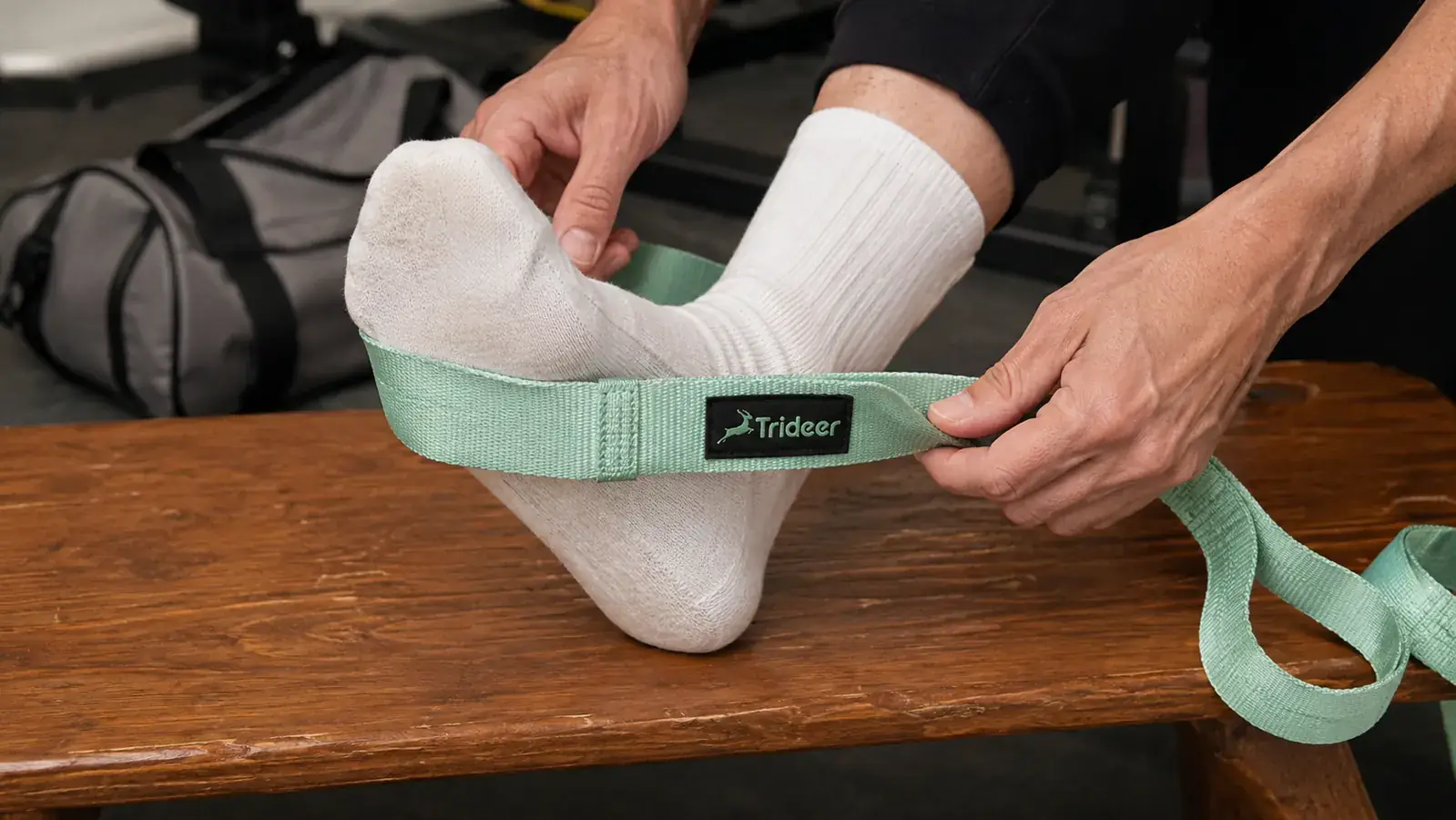
The strap I'm talking about is the Trideer stretching strap, a length of non-elastic nylon webbing with a row of stitched loops running down one side and a padded loop near the end called the leg lifter. Trideer markets it as a PT-style strap, borrowed from what physical therapists use in clinic. That claim is mostly fair, and I'll unpack exactly what it does and doesn't mean further down. First, the parts of owning this thing that the product page glosses over entirely. It's the kind of product with thousands of reviews and a rating that looks nearly perfect at a glance, which is part of why the two mistakes I made felt so avoidable in hindsight.
The Quick Verdict
A solid, honestly-built stretch strap for stiff hips and hamstrings, but it rewards patience and punishes anyone expecting instant relief or a resistance band's give. Read the loop system before you use it, not after.
Amazon Check Today's Price →Before You Buy a Stretch Strap, Read This Part First
Most reviews tell you how a stretch strap changed their mornings. Fewer tell you the mistakes that make people return it in week one. Here's what I'd tell a friend before she clicked buy.
Amazon Check Today's Price on Amazon →How I've Used It
I don't use my strap first thing in the morning the way a lot of reviews describe. I use it in the evening, after a day spent mostly on my feet, usually right after I get home and before I let myself sink into a chair, because once I sit down for the night I don't get back up for stretching. It lives on a hook by my back door now, next to the leash, which is honestly the only reason I use it consistently. If it were in a drawer with my other exercise gear, I'd forget it existed by the second week. On weekends, when there's no single end-of-the-day moment, I try to fit it in either right after a hike or right before I let myself start dinner, whichever comes first.
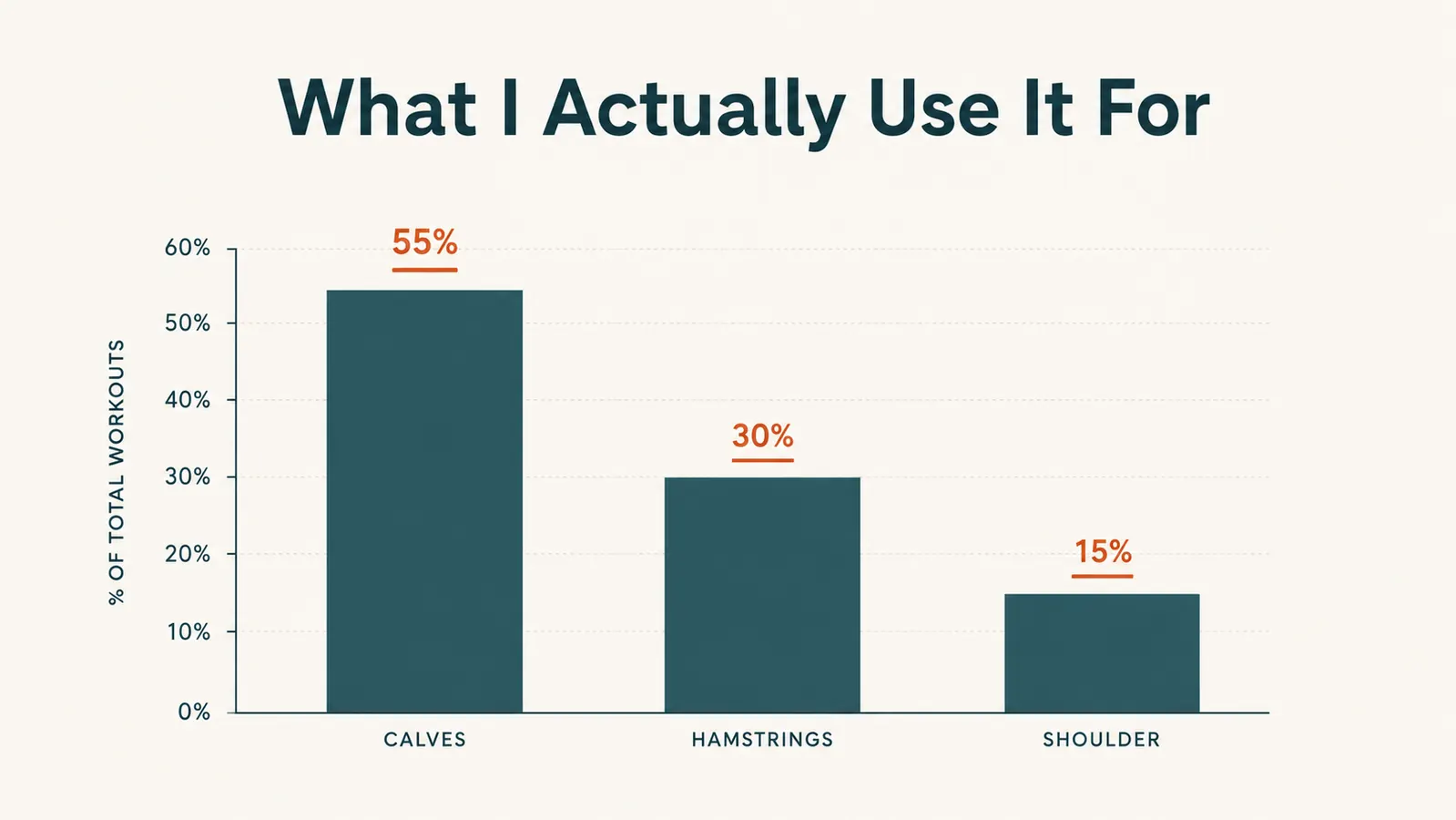
My routine covers calves, hamstrings, and one shoulder stretch I picked up from a physical therapist years ago for an old rotator cuff strain. The shoulder stretch surprised me, it's not what the product photos show at all, everything on the listing is legs and hips. I loop the strap behind my back, grab one end in each hand, and use it to pull my arm into a deeper stretch than I can manage with just my own grip. It works well for that too, which nobody mentions in the reviews I read before buying. I've since read that this is a pretty common use for these straps in physical therapy offices, just not something Trideer chose to put on the box.
For the leg work, I've settled into using the loops closest to the middle of the strap for most of my stretches, adjusting a notch tighter or looser depending on how sore I am that day. It took about a week of trial and error to find what felt right, and that trial and error is part of what I want to walk through honestly, because it's where I made my first real mistake.
I don't stretch every single day, closer to five or six days a week, and I used to feel guilty about the days I skipped until I noticed my stiffness levels didn't really change between a five-day week and a seven-day week. What mattered more was not going more than two days in a row without it. That's a small, practical detail that took months to notice, and it's the kind of thing that matters more than which exact loop you land on.
The Two Mistakes I Made in the First Week
The first mistake was treating it like the resistance band I'd used for years. A resistance band has give built into it, so if you pull a little too hard, the band absorbs it and stretches with you. The Trideer strap has none of that. It's non-elastic on purpose, which is exactly why it holds a static stretch better, but on day two I pulled into a hamstring stretch out of old habit, expecting some slack that wasn't there, and felt a sharp pull instead of a gentle one. Nothing tore, nothing was seriously wrong, but I was sore in a way that had nothing to do with progress and everything to do with not respecting how the tool works. It took a full day for the soreness to fade, and it was enough to make me second-guess the whole purchase before I understood what had actually gone wrong.
The second mistake was looping it around the middle of my foot instead of my heel and the ball of my foot together. It seems like a small detail, and the listing doesn't explain foot placement at all beyond a couple of stock photos. Looped wrong, the webbing dug into my arch on longer holds and I ended up cutting stretches short because my foot was uncomfortable, not because my hamstring was done. Once I adjusted where the loop sat, that problem disappeared completely, but it cost me most of a week of half-hearted, distracted stretching before I figured it out. A friend I mentioned this to admitted the exact same thing had happened to her with a similar strap she'd bought years earlier and eventually gave up on.
Neither mistake is really the strap's fault. But they're also exactly the kind of thing a one-line product description doesn't warn you about, and I'd guess they're behind a decent share of the returns and the reviews that call it uncomfortable or not worth it. If I had to guess, foot placement alone probably explains a third of the negative reviews I read.
What the Listing Photos Don't Tell You
The strap arrives rolled tightly and it has a faint rubbery, new-fabric smell for the first few days, strong enough that I left mine on the porch overnight before using it. Nobody mentions that in the reviews and it's not something you'd guess from a product photo. It fades on its own, and washing it once got rid of the last of it, but if you're sensitive to that kind of thing, it's worth knowing before it shows up in your living room. It's not an unpleasant smell exactly, just noticeable in a way that surprised me for something marketed as a therapy tool.
The webbing is also stiffer out of the box than it looks in photos. It softens with use, but for the first week or two it has almost a cardboard-like feel against bare skin, especially around the ankle. I wore a thin sock the first several sessions just to take the edge off, which isn't something the product page suggests anywhere, even though it would have saved me some mild irritation. By week three it had softened enough that I stopped noticing the sock at all.
And despite being marketed as PT-style, there's no actual instruction booklet in the box, no diagram of stretches, nothing beyond the strap itself. If you're picturing something closer to a home physical therapy kit with a guide included, that's not what arrives. You're expected to already know your stretches or look them up yourself, which is fine once you know it going in, less fine if you assumed otherwise. That's a reasonable trade for what you're getting, but it's still worth setting the expectation correctly before the box shows up.
Why Some of the One-Star Reviews Are Right
I went back and reread the lowest-rated reviews after using the strap myself for a while, and a handful of them are genuinely fair complaints, not just people venting. Several mention the webbing digging into the arch of the foot, which lines up exactly with my own early mistake around foot placement. A few others describe it as uncomfortable on bare skin, which matches how stiff it feels before it's been broken in. Reading them after the fact felt less like criticism and more like a checklist of things I wish I'd known.
A different cluster of one-star reviews came from people who seem to have wanted a resistance band and bought this instead. They describe it as too rigid, no stretch or give at all, hard to work with. They're not wrong about what they experienced, they just bought a product built to do the opposite of what they wanted. Non-elastic is the entire point of a PT-style strap, and if you want something with bounce and give, this isn't that tool no matter how it gets used. If that's what you're after, look for a resistance band instead and save yourself the disappointment.
The last group I'd take seriously are the reviews from people with larger or smaller feet than average, who found the leg lifter loop either too snug or loose enough to slip. I have an average-sized foot and never ran into that, so I can't speak to it firsthand, but it showed up often enough in reviews that it's worth a mention rather than dismissing it.
What This Strap Will Not Do
It will not fix a structural problem. If your hip or shoulder pain has a real diagnosis behind it, a labral tear, arthritis, a disc issue, my Trideer strap is a stretching tool, not a treatment plan, and no amount of consistent use replaces an actual physical therapist looking at how you move. I've used mine for general stiffness and tightness, the kind that comes from being on my feet all day or sleeping wrong, not for anything a doctor has named.
It won't give you results in a few sessions either. The first couple of weeks felt more like adjusting to a new habit than feeling any real change in my stiffness. That's normal for a passive stretching tool, but if you're expecting a dramatic shift by the end of week one the way some reviews seem to imply, you'll likely be disappointed and tempted to write it off before it's had a fair chance.
It also will not build strength on its own. This is a passive stretching tool, you're holding a position, not working against resistance the way you would with a band during active movement. If your goal is strengthening a weak area rather than loosening a tight one, this isn't the right category of product, and I'd say that plainly rather than let the PT-style label imply more than it delivers.
What I Liked
- Non-elastic nylon holds a true static stretch without any give, which is what makes it feel more like clinic equipment than a resistance band
- The loop system lets you fine-tune your reach once you find the right foot placement
- Doubles as a shoulder and upper-body stretching tool, not just legs and hips like the listing photos suggest
- Softens with light use and a single wash, more comfortable by week two than week one
- Straightforward, no batteries or setup, works the same on a hook by the door as it does packed in a bag
Where It Falls Short
- Stiff and slightly rubbery-smelling out of the box, worth airing out before first use
- No included instructions or stretch guide despite the PT-style branding
- Looping it around the middle of the foot instead of the heel and ball causes real arch discomfort, and the listing doesn't explain proper placement
- Not a good fit if you're used to a resistance band and want give or bounce in the stretch
- Leg lifter loop may run snug or loose for feet noticeably smaller or larger than average
Neither mistake was the strap's fault. They're also exactly the kind of thing a one-line product description never warns you about.

Who This Is For
This strap makes sense if you're stiff rather than injured, and you want a passive, non-elastic tool for holding a real stretch instead of bouncing through one. It's a good fit if you're the type who'll actually use something sitting by a door or in a gym bag, and a bad fit if your gear graveyard already has a foam roller and two resistance bands gathering dust. It's also worth it if, like me, you want more than just leg stretches out of it, the shoulder and upper-body use surprised me more than anything the product page promised.
It's also a reasonable pick if you split your time between a gym, a hotel room, and your own living room, since it packs flat and doesn't care where you use it. I've used mine in all three settings without any real difference in how it performs, which isn't something I expected walking in. If consistency is your actual obstacle rather than the stretch itself, having one object that works everywhere removes an excuse.
Who Should Skip It
Skip it if you have a diagnosed injury and need actual treatment, not a stretching accessory. Skip it if you specifically want the give and bounce of a resistance band, because you'll end up in the disappointed camp of one-star reviews through no fault of the product. And skip it if you know you won't take the week it takes to learn proper foot placement, because used wrong, it really can be uncomfortable, and that discomfort has nothing to do with whether it's a good tool.
I'd also skip it if you're shopping based on the star rating alone. A high average rating tells you plenty of people are satisfied, it doesn't tell you whether you're using it the way those people are. Read a few of the lower-rated reviews before you buy, not after, and decide honestly whether their complaints sound like a bad product or a mismatch with what you actually wanted.
The Honest Version, Not the Highlight Reel
It's not perfect out of the box, and it punishes shortcuts. But once you know where the loop goes and what the smell is about, it earns its spot by the door.
Amazon Check Today's Price on Amazon →