
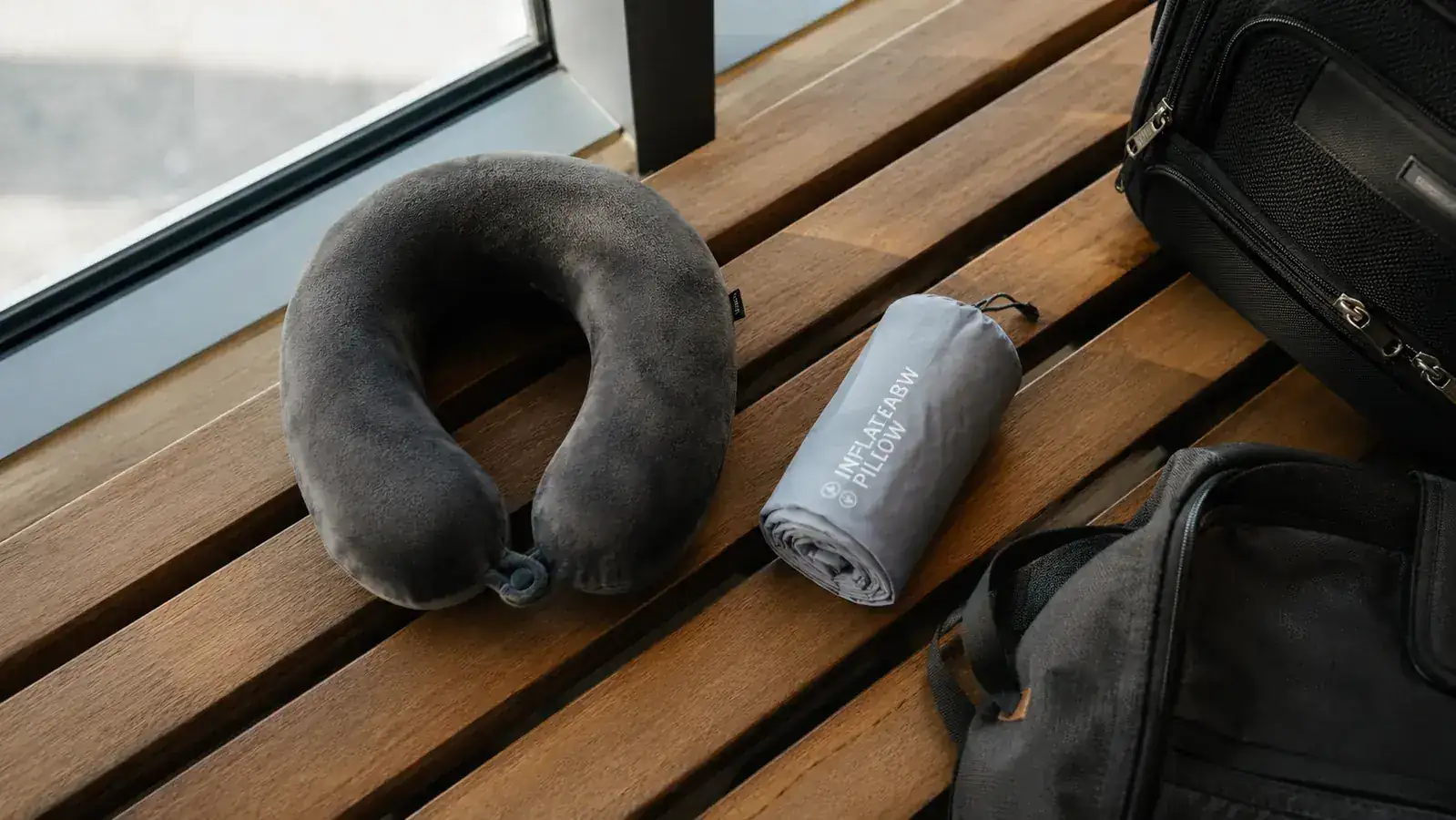
Short answer, if you only read one paragraph: for actually falling asleep on a flight or a long car ride, the memory foam neck pillow wins. I use the MLVOC Airplane Travel Neck Pillow, the one that comes with the 3D eye mask and earplugs built into the kit, and it has been the pillow in my carry on for close to two years now. But I still own an inflatable pillow, and I still pack it sometimes, so this isn't a total blowout. It depends on what the trip actually looks like and what you're optimizing for.
I'm Dana, I'm 52, and between camping trips with my dog Scout and flights to see my sister in Denver, I have logged a lot of hours with my head propped against something that's supposed to pass for a pillow. Some of those hours were miserable. I remember a five hour flight back from a work trip a few years ago where I'd left my old pillow at home and bought a cheap inflatable one at the gate kiosk, and by the time we landed my neck was worse than if I'd used nothing at all. That's the flight that sent me looking for something better.
The MLVOC and a basic inflatable pillow solve different problems, and neither one is wrong, they're just built for different priorities. One solves comfort. The other solves space. Here's where each one actually earns its spot in a bag, laid out honestly, including the places the inflatable genuinely comes out ahead.
| What Matters | MLVOC Memory Foam Pillow | Inflatable Travel Pillow |
|---|---|---|
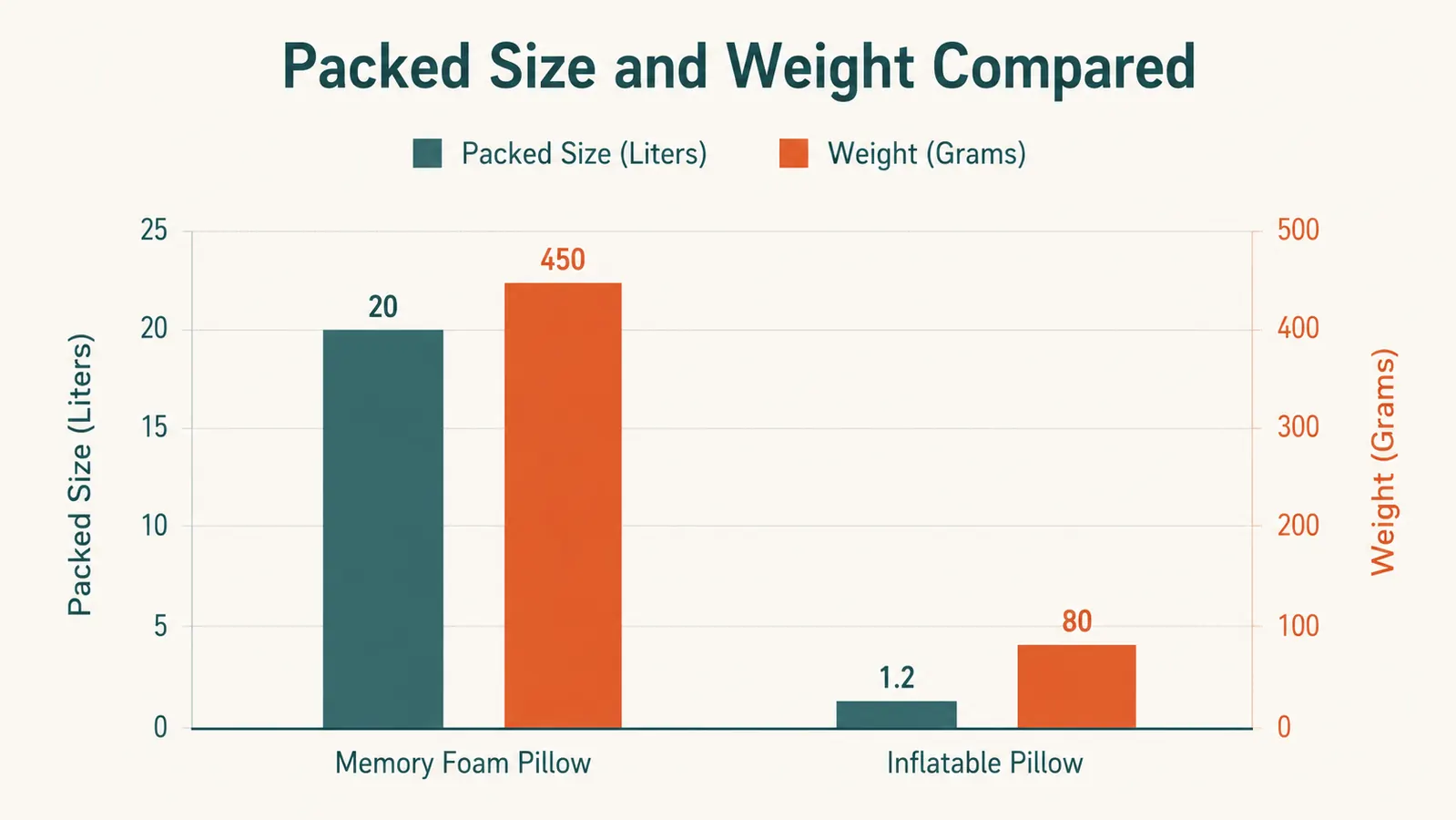
| Packed Size | Compresses down to about the size of a rolled bath towel, still takes real space in a carry on or suitcase corner | Deflates completely flat, folds down small enough to fit inside a jacket pocket or a laptop sleeve |
| Weight | Around 10 to 12 ounces once you account for the eye mask and earplug pouch that come with it | Typically 3 to 5 ounces, barely registers on a packed bag scale |
| Neck Support | Firm, even support that holds its shape for the whole flight or drive, doesn't sag as the hours go on | Support depends entirely on how much air you put in, and it tends to soften as cabin pressure and temperature shift over a long flight |
| Setup Time | No setup at all, clip it around your neck and you're done before the seatbelt sign turns off | Needs to be blown up by mouth or with a small hand pump, usually a minute or two of effort each time you use it |
| Included Extras | Comes as a 3 in 1 kit with a contoured eye mask and a pair of earplugs, everything zipped into one small pouch | Almost always sold on its own, no eye mask, no earplugs, no carrying pouch included |
| Best For Ultralight Packing | Fine for a suitcase or a normal carry on, not ideal if you're trying to shave ounces from a daypack for a backpacking trip | Genuinely better here, this is the pillow I clip to my pack strap when Scout and I are doing a multi day hike |
| Long-Term Durability | The foam holds its shape trip after trip, close to two years for mine, and there's nothing to puncture or spring a slow leak | Valves and seams are the weak point, a slow leak partway through a flight is a real thing that happens with cheaper models |
Add it up and the MLVOC wins more of the categories that actually affect whether you sleep, while the inflatable wins the categories that affect how easy it is to carry. That split matters, because a pillow that packs beautifully but leaves you wide awake at hour six isn't really doing the one job you bought it for.
Where the MLVOC Wins
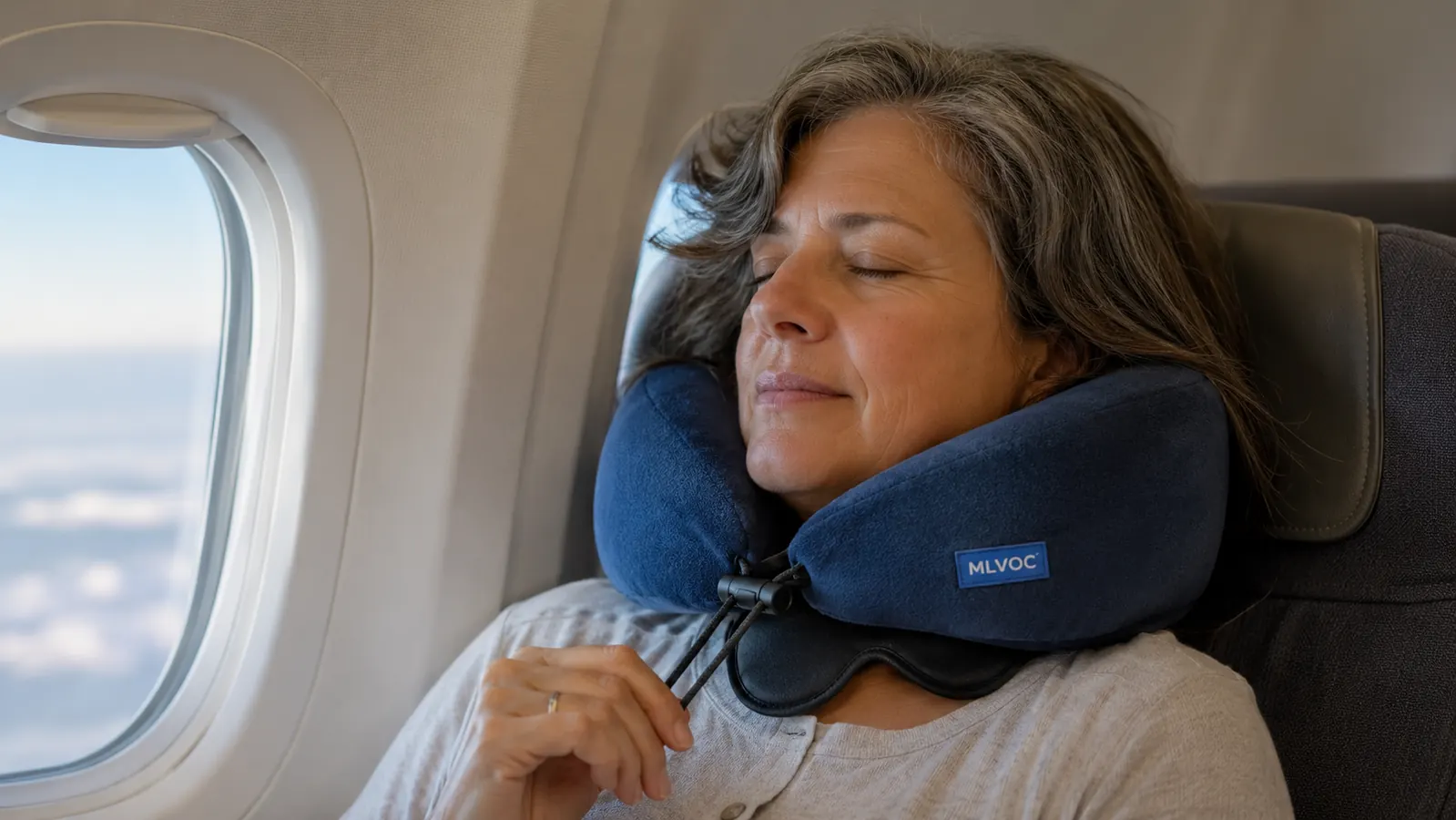
The reason the MLVOC stays in my bag is simple: it works the same every single time. I don't have to think about how much air is enough, I don't have to guess whether it's going to feel firm at takeoff and mushy by hour four. The memory foam holds its shape whether I'm on a two hour hop to see my sister or an eight hour red eye home from a hiking trip out west. That consistency is the whole point of a travel pillow. A pillow that changes shape under you halfway through the flight isn't really doing its job, and I've had that happen with inflatable models more than once.
The other thing that tips it for me is the kit itself. The MLVOC comes with an eye mask that actually curves away from your eyelashes instead of pressing flat against your face, plus a pair of earplugs tucked into a little zip pouch that clips right onto the pillow strap. On a red eye, having all three in one place instead of digging through a personal item bag at 2am matters more than it sounds like it would. I've handed this exact set to my husband on a flight when his own pillow got left in checked luggage, and he used the whole kit without needing to buy anything else at the gate.
There's also a practical detail that doesn't show up in most reviews: the MLVOC's cover is removable and machine washable. After close to two years of flights and a few dusty camping road trips with Scout in the back seat, that matters. I've tossed the cover in the wash more times than I can count, and it still looks and feels fine. An inflatable pillow's velour surface can be wiped down but it's not going through a wash cycle the same way, and after a couple of dusty trips that difference starts to show.
Where the Inflatable Pillow Wins
I'm not going to pretend the inflatable pillow doesn't have a real advantage, because it does, and it's pack size. When Scout and I are doing a multi day backpacking trip and every ounce in the pack matters, the inflatable wins without much argument. It deflates down to something you can flatten into a side pocket, and when it's not in use it basically disappears. The MLVOC, by comparison, is a commitment. It's a foam ring that keeps its shape whether you want it to or not, which is great for support and less great when you're trying to squeeze one more thing into a 30 liter pack already full of a tent stake bag and Scout's collapsible water bowl.
The inflatable also makes sense if you're someone who only travels once or twice a year and doesn't want a dedicated travel pillow taking up drawer space between trips. You can stash it in a glove compartment or a desk drawer and forget about it until the next flight. There's no maintenance, nothing to wash, nothing that loses loft over time the way foam very slowly can. For a light, infrequent traveler, that low commitment is a fair trade for less consistent comfort.
For someone who travels the way I do now, several flights a year plus regular weekend trips with Scout, that tradeoff isn't worth it to me anymore. I've been on the other side of a slow leak at 30,000 feet, waking up an hour into a flight with my head at an odd angle because the pillow had quietly lost half its air somewhere over Kansas. But I'll say it plainly: if pack weight is your main constraint, the inflatable is the honest recommendation, not the MLVOC.
A pillow that packs beautifully but leaves you wide awake at hour six isn't doing the one job you bought it for.
Stop guessing how much air is enough air
The MLVOC holds its shape for the whole flight, no pump, no slow leak halfway through your trip. Check today's price on Amazon and see the full 3 in 1 kit.
Amazon Check Today's Price on Amazon →
How I Actually Decide Which One to Pack
It comes down to one question I ask myself while I'm laying gear out on the bed: am I trying to sleep, or am I trying to survive being awake for a few hours. If the trip is a red eye, a long haul flight, or a car ride where I actually plan to nap, I grab the MLVOC without thinking twice. It's the pillow that goes in the bag first, before the charger, before the snacks, because I know from experience that arriving somewhere rested changes the first day of a trip more than almost anything else does.
If the trip is a backpacking weekend with Scout where the pack itself is already heavy with water, a bear canister, and a stove, the inflatable comes out instead. I'm not trying to get eight hours of quality sleep in a tent the same way I would on a plane, I'm trying to take the edge off a few hours on hard ground, and a few extra ounces of foam I don't need to carry starts to matter more than the support I'd get from it. It's a genuinely different use case, not a compromise.
The one place I've stopped bothering with the inflatable entirely is short regional flights where I used to think I didn't need a pillow at all. Even an hour and a half in an upright seat is enough to leave my neck stiff for the rest of the day if I'm not paying attention, and the MLVOC takes about three seconds to clip on. At that point the extra ounces in my bag are a non issue, so there's no real reason to reach for anything else.
Who Should Buy Which
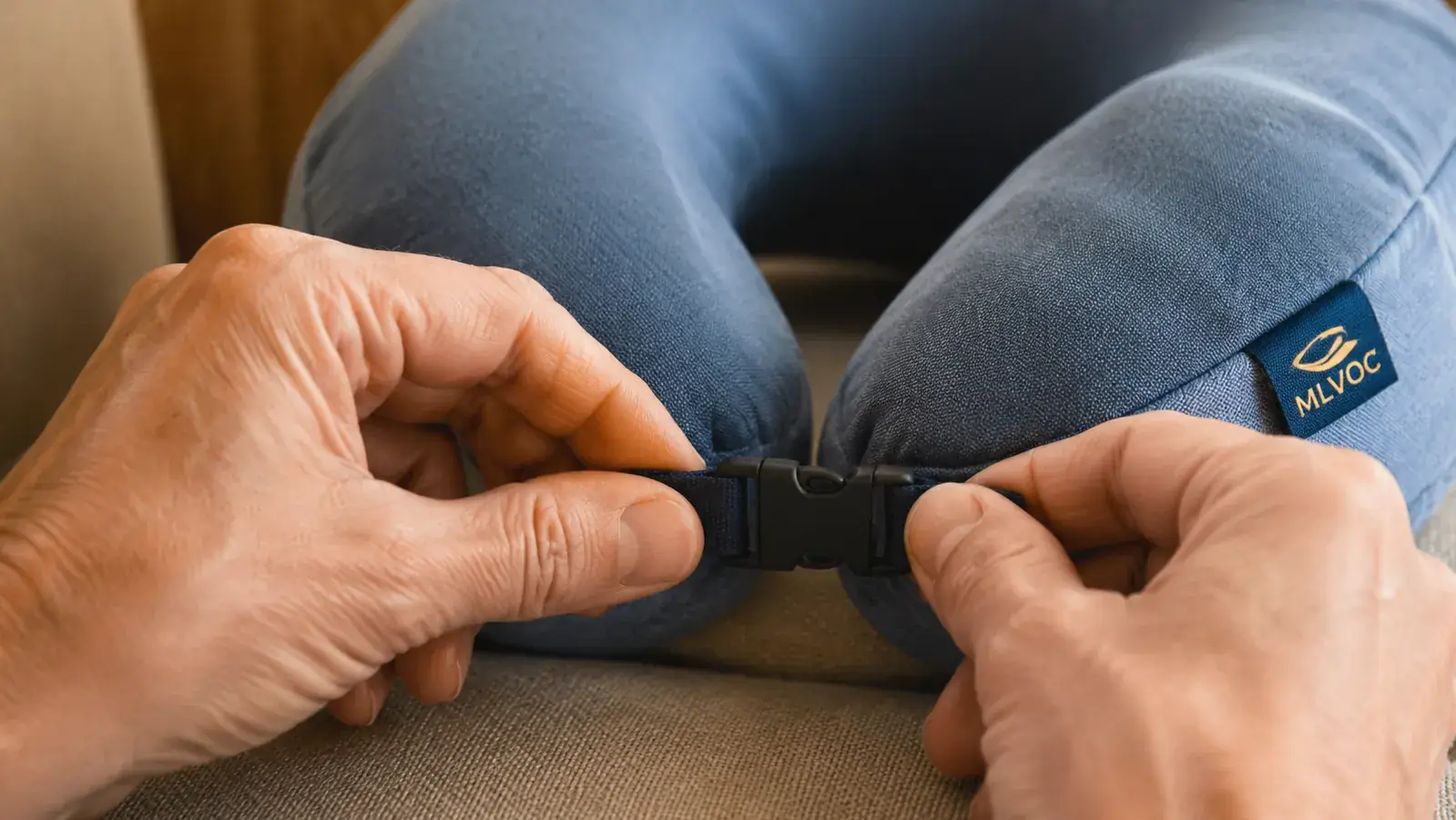
If you fly or drive long distances more than a couple times a year, or if you're the kind of traveler who actually wants to sleep instead of just resting your eyes, get the MLVOC. The consistent support and the built in eye mask and earplugs make it the one that gets used trip after trip instead of getting left in a drawer between vacations. It's also the better pick if you tend to lose or forget small travel accessories, since the eye mask and earplugs are already attached instead of being separate items you have to remember to pack.
If you're an occasional flyer, or if every ounce in your pack genuinely counts because you're hauling it up a trail with Scout style company, the inflatable earns its keep on packed size alone. I keep one of each for exactly that reason. The MLVOC lives in my regular travel bag for flights and long car rides. The inflatable comes out for backpacking trips where the goal is carrying as little as possible. They're not really competing products once you look at it that way, they're just not solving the same problem.
The pillow I actually reach for on every flight
If you want the one that holds its shape from takeoff to landing and comes with the eye mask and earplugs already in the kit, this is it.
Amazon Check Today's Price on Amazon →