
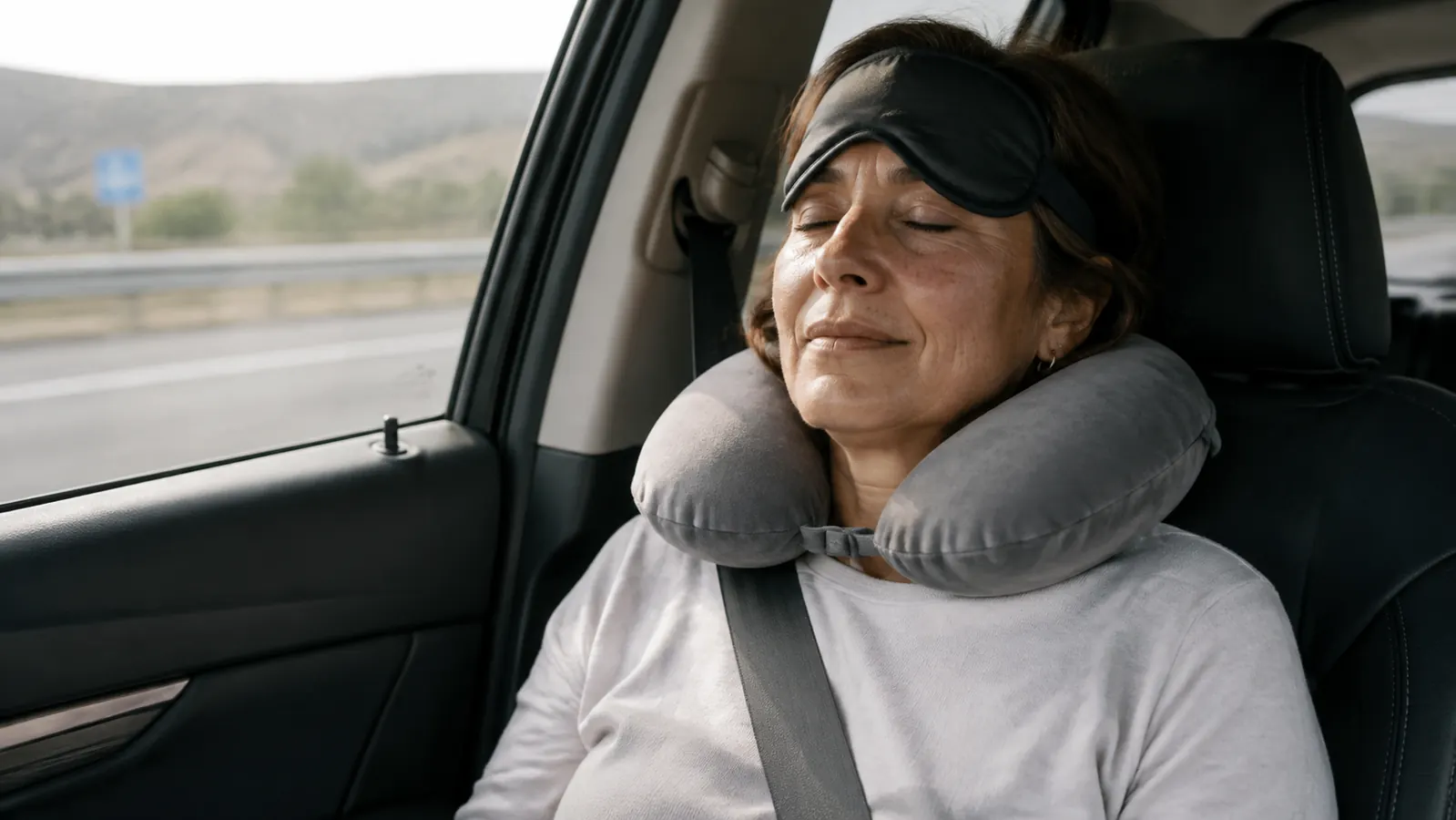
I've spent more hours than I can count as the passenger on long drives to trailheads, campgrounds, and the handful of national parks that are worth a six-hour haul, Scout curled up in the back seat the entire way. For years I told myself I'd just close my eyes and rest a little, and for years I woke up an hour later with my chin on my chest, a knot in the side of my neck, and a headache that lasted until we were setting up camp. Sleeping upright in a moving vehicle, even as a passenger with nothing to do but relax, turns out to be its own small skill, and I didn't have it. I'd usually blame the seat, or the road, or just tell myself I'm not someone who can sleep sitting up, which isn't really true once the setup is right.
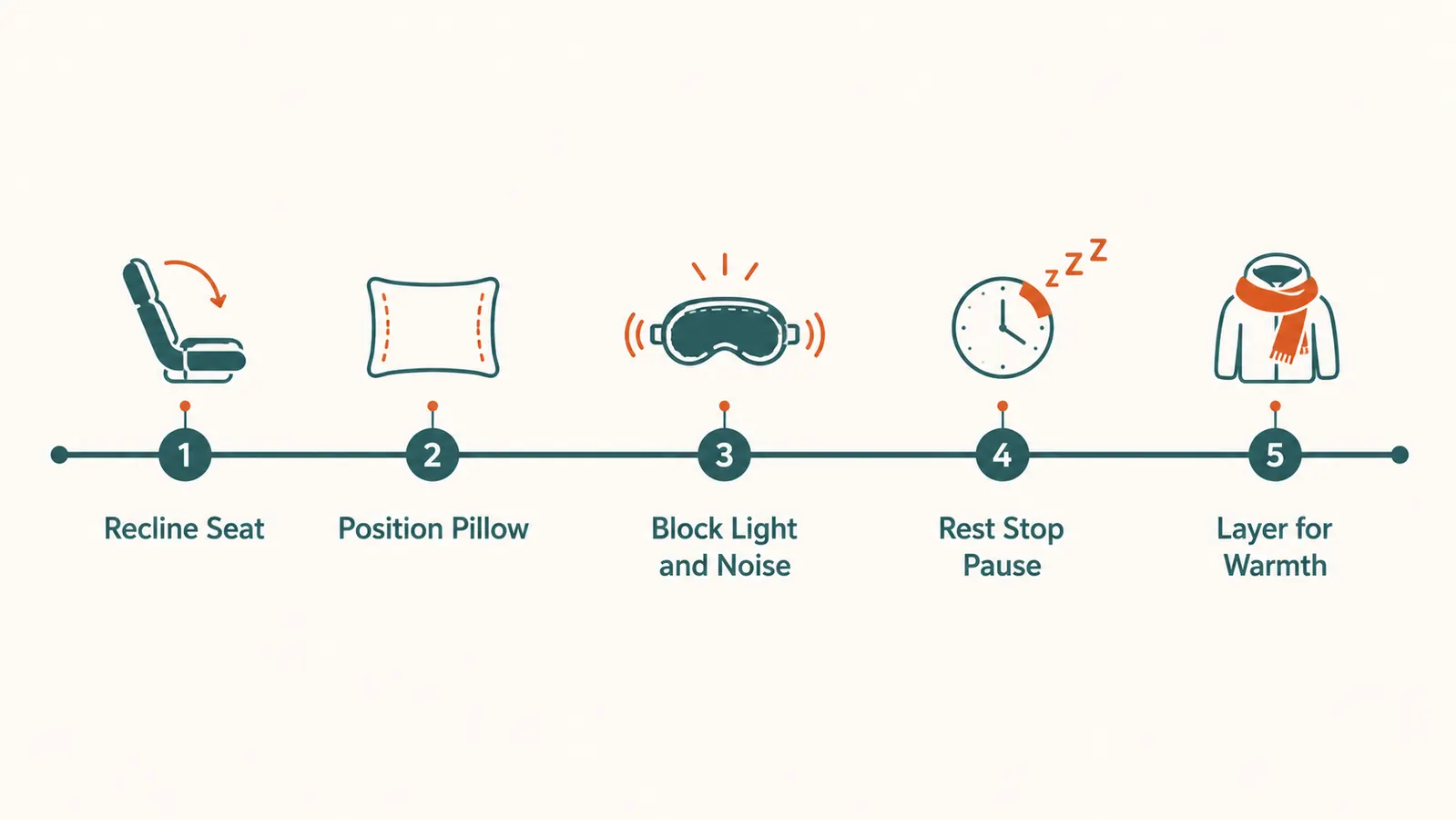
What changed things was less about willpower and more about setup. Once I started using an MLVOC travel neck pillow the right way, instead of just draping it around my neck and hoping, actual sleep as a passenger became possible, not just a doze that left me worse off than when I started. This is the five step routine I use now, every time I'm not the one driving, whether that's a two hour hop to a lake or the long haul out to a park I've been wanting to hike for years. It sounds like a lot of steps for something as simple as a nap, but once it's a habit, the whole routine takes under a minute to set up.
The Pillow That Made Passenger Seat Sleep Possible
Every step below assumes an MLVOC travel neck pillow is already in the car, not buried in a suitcase in the trunk. It packs down small enough to live in the door pocket, and the eye mask and earplugs that come with it do more of the work than the pillow alone. Having all three pieces in one kit is what actually gets it used trip after trip instead of left at home.
Amazon Check Today's Price on Amazon →Step 1: Recline the Seat Before You Try to Sleep, Not After
This sounds obvious written out, but I skipped it for years out of some vague sense that reclining a passenger seat felt lazy, like I should sit up straight and be a good travel companion even with my eyes closed. That's a silly reason to end up with a sore neck. Now, once we're settled into a long stretch of highway with nothing interesting to look at, I recline the seat back to somewhere between thirty and forty five degrees, enough that my head is genuinely supported by the headrest instead of hovering forward over my own shoulders.
The angle matters more than people think. Too upright and your head still has nowhere to go but forward the second you relax, which is exactly how you wake up with your chin buried in your chest. Too far back and the seatbelt sits wrong across your neck and you end up bracing against every bit of road texture instead of sinking into the seat. I've found the sweet spot is close to a mild recliner angle, not flat, just enough that gravity is working with my neck instead of against it.
If the seat has adjustable lumbar support, I bring that forward a notch too. A flat back against a flat seat back means your lower back is doing work it doesn't need to be doing on a two hour stretch, and that tension travels up into the shoulders and neck by the time you're trying to actually fall asleep. I check the headrest height at the same time, since a headrest sitting too low just pushes my head forward no matter how far back the seat is reclined.
Step 2: Position the MLVOC Pillow So It Supports Your Neck, Not Just Your Chin
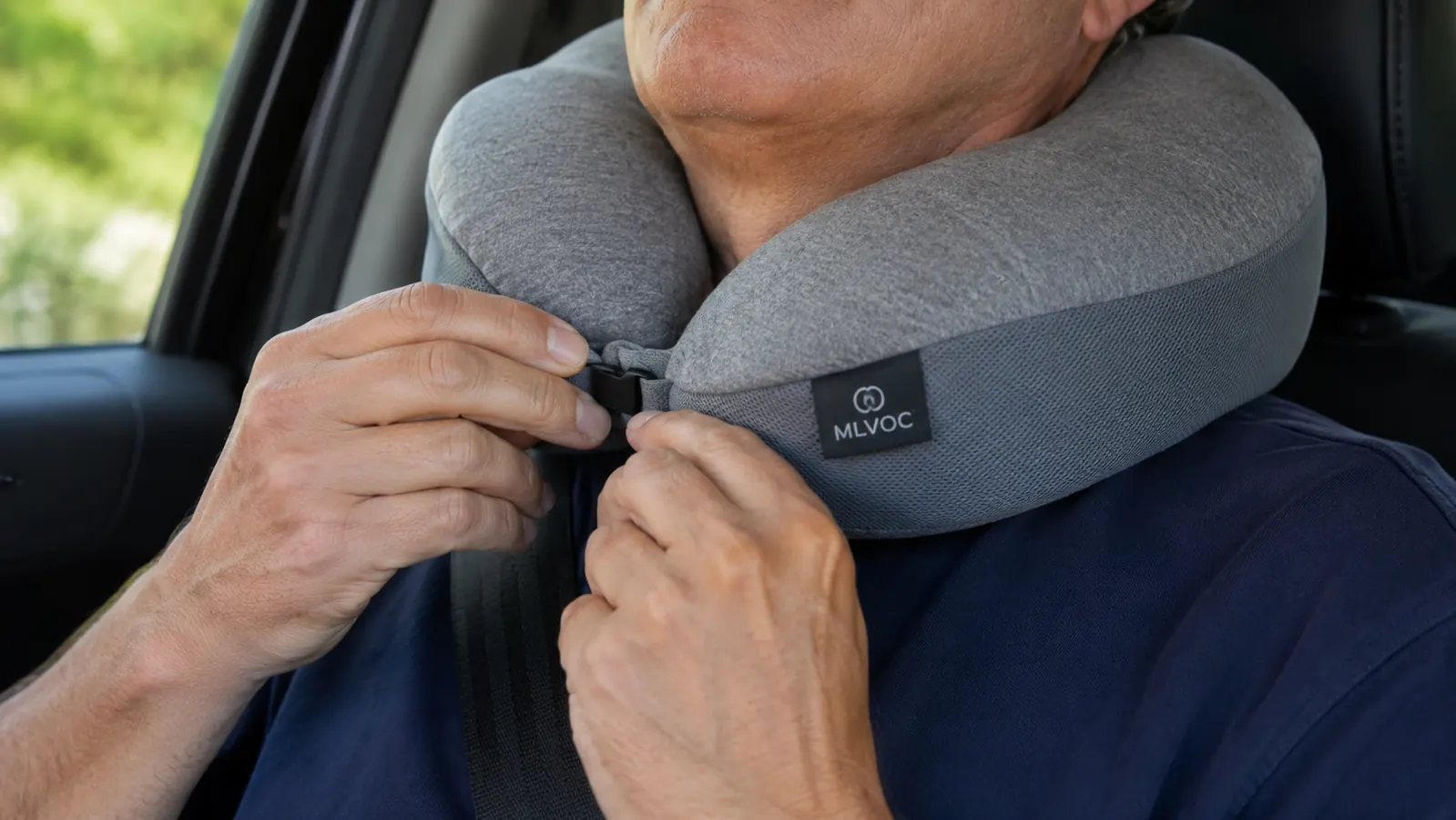
The single biggest mistake I made for years was wearing a neck pillow the way you'd wear a scarf, loose around the front, doing almost nothing when my head actually tipped sideways or forward. The MLVOC pillow is shaped like a U for a reason, and the part that matters most is the two raised sides that sit right under your jaw and along the sides of your neck, not the front piece resting against your collarbone.
What works for me is snapping the two ends together in front so it forms a closed loop rather than an open horseshoe, then adjusting it so the raised foam sits snug against both sides of my jaw. That's what actually catches my head when I start to nod off sideways toward the window, which is where most of my old neck pain came from, not from tipping forward but from slumping sideways against cold glass for forty five minutes. It took a couple of drives to find the exact snugness that felt supportive without feeling like something was pressing on my throat.
I also push the back of the pillow flush against the headrest instead of letting it float a couple inches forward. It should feel like the pillow and the headrest are working as one continuous surface behind my neck, not like a separate cushion I'm balancing on top of the seat. Once the MLVOC pillow is seated that way, snug, closed in front, flush against the headrest, it does most of the work without me having to think about posture every few minutes.
Step 3: Block the Light and Road Noise Before You Close Your Eyes
This is the step I underrated the most before I had a kit that actually included an eye mask and earplugs alongside the pillow. Even with a perfectly positioned neck pillow, bright midday sun through the windshield or the constant low roar of tires on a two lane highway is enough to keep your brain half awake the whole time, which is why so many car naps feel more exhausting than restful. Light and noise are the two things I underestimated for years, always assuming a comfortable pillow alone would be enough.
The 3D eye mask that comes in the MLVOC set has a slight curve to it so it doesn't press flat against your eyelids, which sounds like a small detail until you've tried sleeping in a flat mask that pins your eyelashes down every time you blink. I pull it on as soon as I've settled into the reclined position, before I start drifting, because trying to reach up and fix a mask once you're half asleep just wakes you back up.
The foam earplugs matter more on the highway than they do around town. Road noise is fairly constant, but the sudden stuff, a passing semi, gravel under the tires, someone's music at a stoplight, is what actually jolts you out of a light sleep. Cutting that down doesn't create total silence, but it smooths the noise into something my brain can tune out instead of reacting to every few minutes.
Step 4: Use Rest Stops for Real Rest, Not Just a Bathroom Break
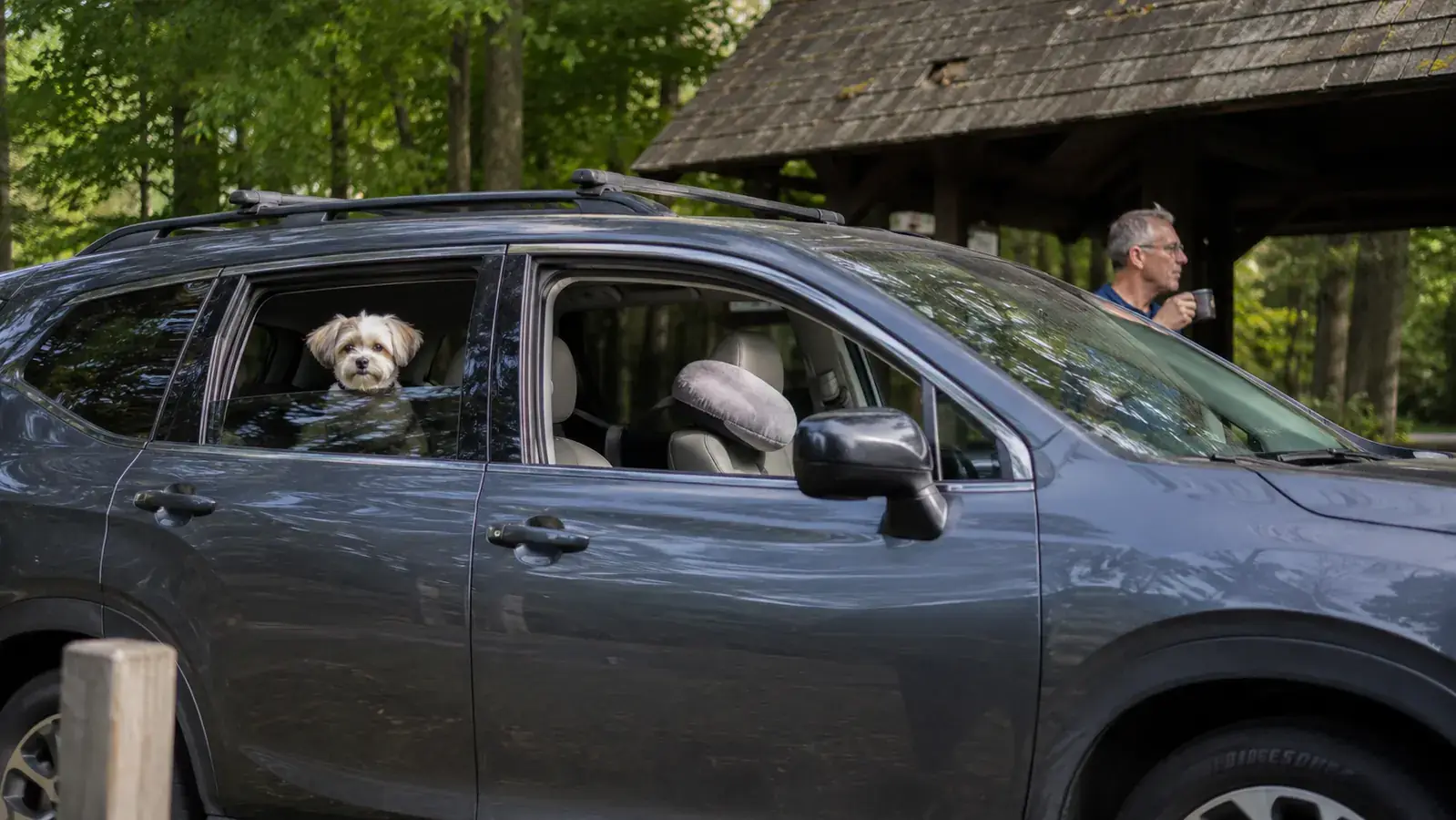
None of this is about sleeping while anyone is behind the wheel. What I'm describing here is either riding as a passenger while someone else drives, or pulling into a rest stop and parking so the person who's tired can actually close their eyes for twenty or thirty minutes before getting back on the road. On our longer drives to a trailhead, we've started treating rest stops as scheduled pauses instead of something we only stop for when someone's eyes are already heavy.
Parked at a shaded rest area, the whole setup from steps one through three works even better than it does moving, because there's no road vibration and no sudden noise to fight through. I'll recline the seat, put the MLVOC pillow and mask on, and set a timer for twenty five or thirty minutes. Scout usually settles down in the back the second the engine's off, which somehow makes it easier for me to relax too.
Cracking a window an inch or two makes a real difference on a parked stop, since a closed car warms up fast even with mild weather outside. I've learned to check that before I put the mask on, not after I'm already too warm to fall asleep. A short, genuinely restful stop like this has done more for how we both feel arriving at a campsite than any amount of gas station coffee ever did, and it usually costs us less time than a slow lunch would anyway.
Step 5: Layer In a Blanket or Jacket for Warmth and a Little Extra Support
Car interiors run colder than you'd expect once you stop moving around, especially with the air conditioning on or a window cracked for fresh air like I mentioned above. I keep a light packable blanket in the door pocket next to the MLVOC pillow now, specifically for this. Getting cold partway through a rest stop is one of the fastest ways to wake yourself back up, and shivering undoes any comfort the pillow was providing.
A folded jacket or small travel pillow tucked between my hip and the door also helps on longer stretches, taking a little pressure off my lower back so I'm not unconsciously bracing there while I'm trying to relax my neck and shoulders. It's a small thing, but comfort in the car works as a chain, tense hips lead to a tense lower back, which leads right back up into the neck the pillow is supposed to be protecting.
The last thing I check before settling in is my own posture in the seat itself, hips squared, not twisted toward the window to look out. Twisting to one side for a long stretch, even a comfortable looking one, tends to leave a specific kind of soreness on one side that shows up an hour or two later at the campsite, long after the drive is over and I've already forgotten what caused it.
What Else Helps
Beyond the pillow itself, a few habits make a bigger difference than I expected. Staying hydrated before a long drive helps more than caffeine does once you're actually trying to rest, since a dehydration headache can undo a decent nap fast. I also try not to eat anything heavy right before I plan to sleep in the car, a full stomach in a reclined position is its own kind of uncomfortable. And keeping the temperature on the cooler side rather than warm tends to help me actually fall asleep faster, even with the blanket nearby for later.
Timing matters too. If I know we've got a five or six hour drive ahead, I try to plan my rest window for whatever stretch is flattest and most boring, the middle of a long straight highway rather than the winding roads closer to the mountains or the coast. Sleeping through the pretty parts of a drive feels like a waste, so I'd rather close my eyes during the part I'd be staring at my phone through anyway, and save my energy for the scenery that's actually worth being awake for.
The pillow does a lot of the work, but it only works if the seat, the light, and the timing are set up to let you actually rest instead of just closing your eyes and hoping.
Set Up the Passenger Seat That Actually Lets You Sleep
If long drives to the trailhead or the campground have been leaving you stiffer than the hike itself, the setup above starts with one thing in the door pocket. The MLVOC kit includes the pillow, eye mask, and earplugs together, so you're not piecing together three separate items before the next road trip, and it's small enough to keep in the car permanently instead of packing it fresh every time.
Amazon Check Today's Price on Amazon →